
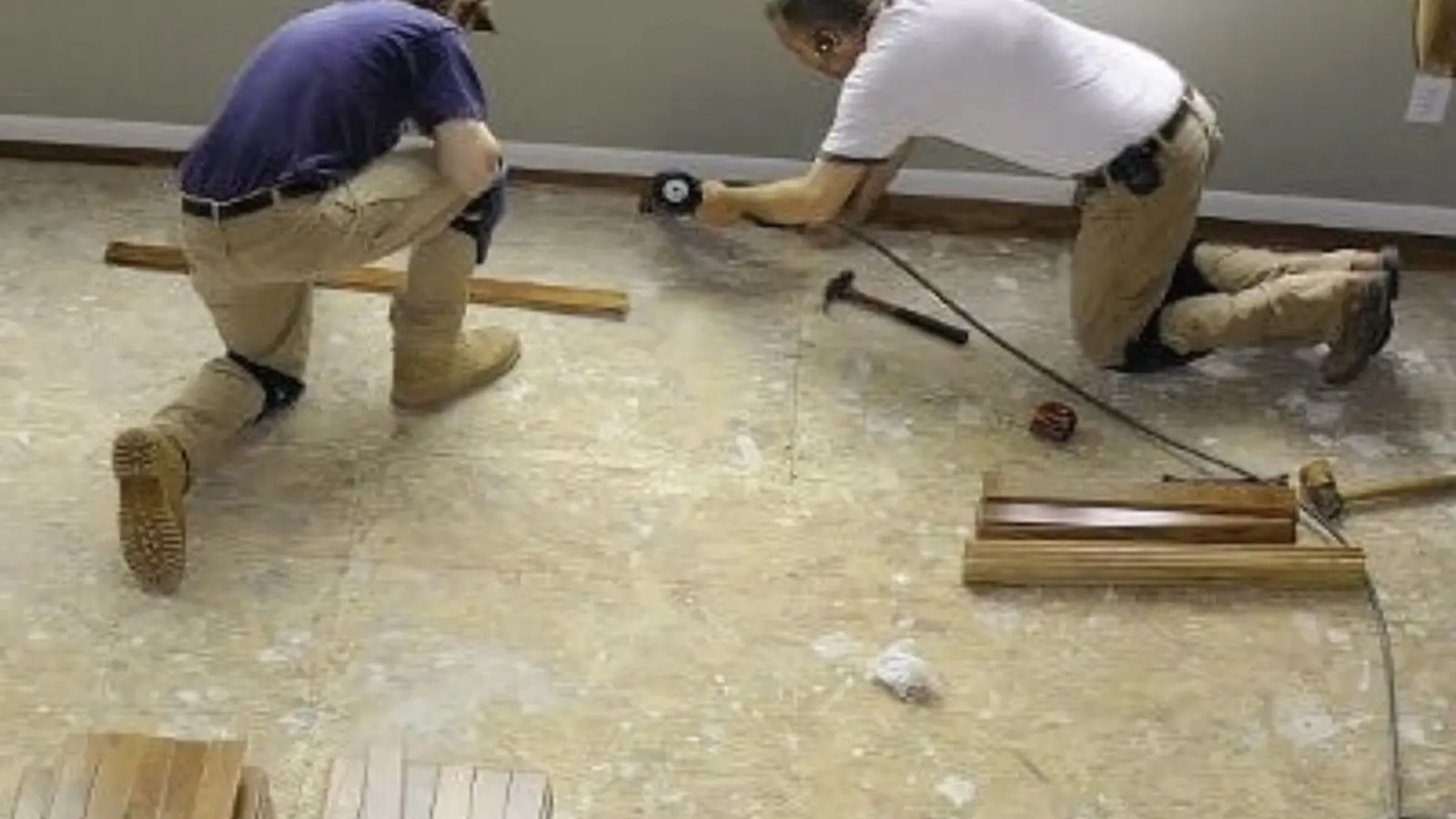
Water damage repair is the rebuild that begins once your home is dry: replacing the drywall, insulation, flooring, trim, cabinets and paint that water ruined. If you live in Laguna Niguel and the leak has been stopped and the materials dried, this page covers what comes next. Wet finishes still have to be sorted into keep, repair and replace, and the new work has to blend with the old.
We explain the scope and price before work starts. Call (949) 670-0939 and ask for a same-day response when available.
Rebuilding is a second step, not a shortcut
Closing up a wall over damp framing is how one leak turns into two jobs. Before anything is cut or replaced, moisture meters should be read on studs, subfloor and the back of drywall, then compared with a dry reading from an unaffected wall. EPA guidance says to dry water-damaged areas within 24 to 48 hours to prevent mold, so a repair that follows a longer delay deserves a closer look behind the surface.
If your home is still wet, start with structural drying first, or emergency water removal when water is standing now. For debris, contaminated materials and odor, see water damage cleanup. The page you are reading handles the rebuild that follows all three.
Why older homes here need a closer look before the rebuild
The city's housing element says most Laguna Niguel homes were built before 1990, with about 6,000 units built before 1980 and older neighborhoods dating to the late 1960s and early 1970s. For you, that means a wet wall can hide old supply lines, layered flooring and paint from several eras. A good scope opens the wall far enough to see what is actually behind it.
Rain matters too. The city's hazard plan puts average rainfall near 13.1 inches a year, and the wet months run roughly November through March. Roof, window and stucco leaks tend to show up as ceiling stains after those storms, so have the entry point found and fixed before any new drywall goes up.
Drywall that stayed wet
Soft, crumbling or sagging panels, and any panel with a stain that keeps widening, are cut out and replaced.
Wet insulation
Batts that held water are usually pulled, since compressed wet insulation keeps moisture against the framing.
Floors that cupped or lifted
Hardwood, laminate and vinyl plank each fail differently. Moisture readings decide what stays.
Swollen cabinet boxes and trim
Particleboard swells and rarely recovers. Solid wood often dries and can be refinished.
From dry readings to final coat
Confirm the structure is dry
Readings from meters, and thermal imaging where useful, are matched against a dry reference before closing anything.
Open and remove
Damaged drywall, insulation, flooring or cabinet parts come out with cut lines set past the last wet reading.
Rebuild the layers
Insulation, drywall, taping and mud coats, underlayment and flooring go back in the right order.
Finish and match
Texture, primer, paint, trim and sealant are blended to your existing surfaces, then walked through with you.
Ceiling and Wall Water Damage Repair
A water-stained ceiling is repairable only after the source is fixed and the cavity above it is dry. Drywall that sags, feels soft under gentle pressure, crumbles at the edges or shows widening rings is normally cut out and replaced. A firm, dry stain with no sag can often be sealed with a stain-blocking primer and repainted, but confirm that with a meter first.
Wall repair follows the same logic. The crew marks a cut line beyond the last wet reading, removes the panel and checks the studs and insulation behind it. New drywall is hung, taped, mudded in coats, sanded and primed. Texture is the hard part, because knockdown, orange peel and smooth finishes all differ, so ask to see a matched sample before the final coat.
Paint the whole wall or ceiling plane from corner to corner. A patch painted alone usually shows in side light, and the extra paint costs less than a second visit.
Hardwood Floor Cupping After a Leak
Cupping means board edges rise higher than the centers, because the underside of the wood stayed wetter than the top. A leaking washer valve, dishwasher line or AC condensate line under a floor can cause it. Do not sand early. The boards must reach a stable moisture level first, which can take days or weeks of controlled drying with air movers and dehumidifiers.
Many floors flatten as they dry, and a light sanding and refinish finishes the job. Boards that stay crowned, lift off the subfloor or show dark staining are replaced. Ask for board and subfloor readings before anyone sands, and ask what finish and stain will blend with the rest of your floor.
Repair or replace: a decision guide by material
| Material | Often repaired when | Usually replaced when |
|---|---|---|
| Drywall | Dry, firm, no sag, stain is old and the source is fixed | Soft, sagging, crumbling, or wet for a long stretch |
| Insulation | Never wet, or only surface damp and quickly dried | Soaked batts, or any wet insulation in a closed cavity |
| Hardwood floor | Cupping eases as moisture readings fall | Crowning stays, boards buckle, or the subfloor is damaged |
| Cabinets | Solid wood doors and frames that dried flat | Particleboard boxes that swelled or lost their finish |
These are starting points. The final call comes from moisture readings and a look at what is behind the surface.
Reputable crews follow the published ANSI/IICRC S500 standard for water damage restoration, and the S520 standard for mold. You can ask any company which standard guides its drying and containment decisions.
Not sure what has to be replaced?
Call (949) 670-0939 for an assessment of the damaged areas. Scope and price are explained before work starts.
Before anyone cuts into a wet wall or ceiling
- Stay out from under a sagging or bulging ceiling. Trapped water can release suddenly.
- If water has reached an electrical panel or outlets, stay out. Cut power only if the panel is dry and safe to reach, and call 911 or your electric utility first.
- If you smell gas, leave and call SoCalGas before calling anyone else.
- Sewage or drain backup in the area means contaminated materials. Keep people and pets away and use the cleanup page instead of a repair.
- Homes built before 1980 can contain older materials in paint, texture and flooring. Ask about testing before sanding or cutting.
Permits, licenses and who does which trade
California's contractor board (CSLB) has no classification for water damage restoration in its list, but the rebuild trades are licensed: drywall, flooring, painting and plumbing each have their own. CSLB requires a license for work costing $1,000 or more in labor and materials combined, and you can check any license on its License Check tool. Ask who is doing each trade on your job.
FEMA advises checking with local building officials before repairs, since permits may be needed for walls, plumbing and other work. The city's Building and Safety Division at 30111 Crown Valley Parkway handles permits, and its page does not address water-damage repairs specifically. Call the counter before you sign off on a scope.
What moves the price of a rebuild, and what insurance usually does
| Cost factor | How it moves the price | What to ask |
|---|---|---|
| Size of the affected area | More wet drywall, flooring or cabinet runs means more demolition and rebuild labor | Which rooms and how many square feet are in scope? |
| Materials and finish level | Solid hardwood, stone tile or custom cabinets cost far more to match than basic finishes | Can I see matching options before ordering? |
| Water category | Gray or contaminated water means more material is removed instead of dried | Which category does the assessment assign? |
| Drying time and equipment | Longer drying delays the rebuild and adds equipment days | What readings will show it is dry enough? |
| Hidden conditions | Old pipes, wet insulation or mold behind a wall can widen the scope | What happens if you find more once the wall is open? |
None of these yields a number by itself. The real figure comes from a scope written after assessment.
Sudden and accidental water damage is often covered by a homeowners policy, while gradual leaks and neglect often are not, and flood usually needs separate flood coverage. Check your policy and ask your insurer.
California regulations require insurers to acknowledge a claim within 15 calendar days and to accept or deny it within 40 calendar days after proof of claim. The state insurance department also suggests photographing the damage and holding off on extensive permanent repairs until the adjuster has visited. Call (949) 670-0939 for the real number on your scope.
Laguna Niguel rebuild notes that change your decisions
Your water comes from Moulton Niguel Water District. The district says the house shut-off valve is typically at the front of the home just below the hose bib, so find it before a plumber arrives. A leak you cannot stop is one you cannot rebuild around.
Electric service is split by address: Southern California Edison in the west and San Diego Gas & Electric in the east. Look at your bill before you call about power to a wet area. Gas is SoCalGas.
Most local homes sit on slab or raised foundations, so floor repairs usually mean slab-on-grade flooring or wood subfloor over a crawl space. Ask which one your home has, because subfloor damage changes the scope.
If the damage includes dark growth on drywall or a musty smell that returns, read about mold remediation before any new finishes go on. Larger events with creek or storm water follow different steps, covered under flood damage restoration.
Water damage repair questions from Laguna Niguel homeowners
No. Drying removes moisture from the structure, and repair replaces what could not be saved. The rebuild should start only after moisture readings match a dry reference. A crew that starts hanging drywall first is rebuilding over a problem.
Only if the source is fixed, the area reads dry on a meter, and the drywall is firm with no sag. Use a stain-blocking primer first, since ordinary paint lets stains bleed through. If the stain returns after rain, the leak is still active.
It depends on the scope. FEMA advises checking with local officials before repairs, and permits may be needed for walls, plumbing and similar work. The city's Building and Safety Division can tell you what applies to your address, so ask before work starts.
It can, with effort. Texture type, sheen and the age of your paint all affect the match. Ask for a test patch, and expect the whole wall or ceiling plane to be painted corner to corner.
Its troubleshooting guide treats indoor plumbing as the customer's concern and points to licensed plumbers. Close the house shut-off valve and watch the meter. If it keeps moving, there may be a service line leak, so call a plumber or leak detection. Ask your water district who owns which pipe.
Look up the contractor on CSLB's License Check tool. Drywall, flooring, painting and plumbing are licensed trades, and work of $1,000 or more in labor and materials combined needs a license. Ask who will perform each trade on your job.