
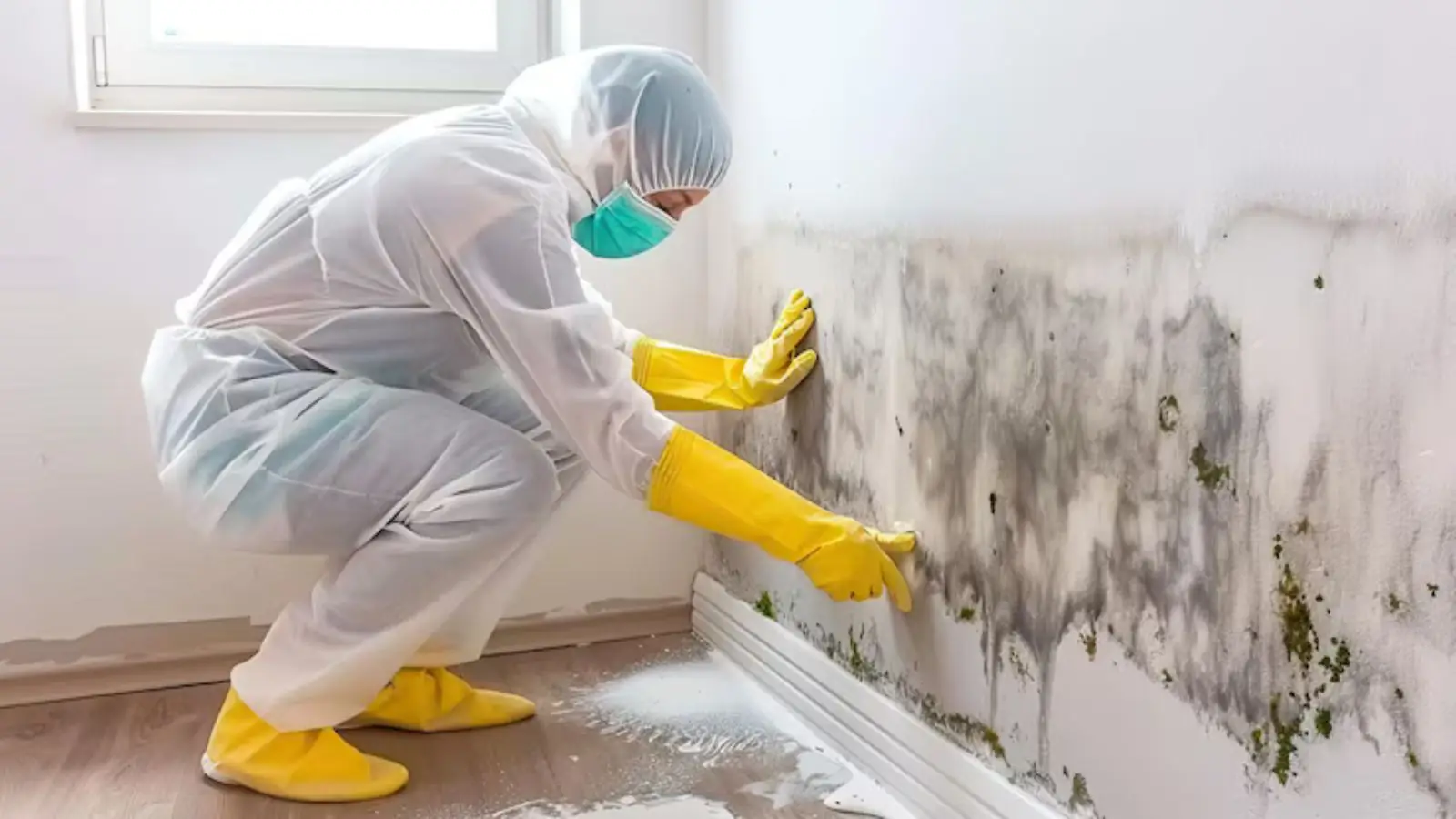
Mold remediation is the process of containing mold-affected areas, removing contaminated materials, cleaning what can be saved and correcting the moisture that fed the growth. In Laguna Niguel it usually begins with a leak that went unnoticed or was dried too late. This page covers that cleanup, which is different from drying a fresh leak or rebuilding afterward.
Our process follows ANSI/IICRC S520, the published industry standard for mold remediation. We explain scope and price before work starts. Call (949) 670-0939 for a same-day response when available.
Musty smell, dark spots, or a stain that keeps coming back?
Those are signs of long-lasting moisture, and the stain or smell is the part you can see. Behind it, drywall paper, insulation or framing may still be damp. The trade that finds the moisture, contains the growth and removes it properly is mold remediation, and that is what the rest of this page explains.
Handle it yourself or call a crew
EPA says an area smaller than about 10 square feet, roughly a 3 foot by 3 foot patch, can usually be handled by the homeowner. It advises hiring help when there is a lot of water damage or growth covers more than that. Sewage or contaminated water calls for a professional with experience in that cleanup. Do not paint or caulk over mold, because the moisture underneath keeps working.
| Situation | Reasonable first move | When to call a crew |
|---|---|---|
| Small spot on a hard surface, such as a bathroom tile line | Fix the moisture source, clean the surface, dry it fully | The spot returns, or the surface is porous and stays stained |
| Stain on drywall or ceiling after a leak | Stop the leak and check the area with a moisture meter | Growth spreads, the panel is soft, or it exceeds about 10 square feet |
| Musty smell with nothing visible | Look under sinks, around toilets and near the AC condensate line | The smell persists and a moisture source is found behind a surface |
| Growth after sewage or contaminated water | Keep people and pets away from the area | Immediately, since this needs trained crews |
| Growth in a crawl space or on insulation | Do not disturb it or run fans across it | Almost always, since porous materials and tight access complicate cleanup |
Anyone with health concerns about mold should speak with a physician. We do not diagnose or give health advice.
Mold Removal and Black Mold Cleanup
Dark or black growth gets the same careful process as any other color. Color alone cannot tell you the type of mold, so a crew treats it by what it is growing on, how far it has spread and how wet the material is. Porous items such as drywall, insulation and carpet that are mold-affected are usually removed. Hard surfaces such as framing and tile can often be cleaned.
The work is contained with plastic sheeting, and a negative air machine with a HEPA filter keeps air moving out through the filter instead of into the rest of your home. Materials are removed, bagged and carried out, then surfaces are HEPA vacuumed and damp wiped. Areas are dried and checked with moisture meters before anyone rebuilds.
Find the moisture
Meters and thermal imaging trace where the water came from and how far it traveled.
Contain the area
Plastic barriers and filtered air control keep disturbed material from spreading to other rooms.
Remove and clean
Affected porous materials are taken out. Salvageable surfaces are HEPA vacuumed and damp wiped.
Dry and verify
Readings confirm the area is dry. Independent clearance testing can be added if you want a documented result.
Mold After Water Damage
Mold needs moisture. EPA says that if wet or damp materials are dried within 24 to 48 hours after a leak or spill, in most cases mold will not grow. That window is why a leak under a sink, behind a toilet or along an AC condensate line matters so much. Roof and siding leaks are worse, since the water often travels into walls where you cannot see it.
Check the cabinet under each sink and the wall behind each toilet first. Those are the spots where slow leaks hide longest.
If water just came into your home, structural drying is the first call, and it can prevent a later remediation job. If growth is already present, the cleanup comes first and any rebuild second. When the area is clean and dry, our water damage repair page covers replacing drywall, flooring and paint.
Found growth after a leak?
Call (949) 670-0939 to have the area assessed. Scope and price are explained before any work begins.
Mold Testing and Inspection
EPA states that in most cases, if visible mold growth is present, sampling is unnecessary. It also says no EPA or other federal limits have been set for mold or mold spores. For you, this means a test result will not give a pass or fail number, so testing is not a way to decide whether visible growth must be removed.
Surface sampling can be useful afterward, to determine whether an area has been adequately cleaned. Ask about independent clearance testing after remediation, meaning a tester who does not work for the cleanup company. A buyer's lender sometimes asks for that documentation. An inspection starts with moisture readings, a visual survey and questions about the leak history, and sampling is added only when there is a reason.
Safety before anyone starts on suspected mold
- Do not run a standard fan or HVAC across the area. It can spread disturbed material through the house.
- If water touched an electrical panel or outlets, stay out. Cut power only if the panel is dry and safe to reach, and call 911 or your electric utility first.
- If a drain backed up, treat the area as contaminated. Keep people and pets away and leave it to trained crews.
- If you smell gas, leave and call SoCalGas before anything else.
- Questions about symptoms belong with your physician.
Licenses, scope and what to ask a mold company
California's contractor board (CSLB) has no mold or water damage classification in its list. Ask whether your state licenses mold work and what license applies to your job. The rebuild trades, such as drywall, flooring, painting and plumbing, are licensed, and CSLB requires a license for work costing $1,000 or more in labor and materials combined. You can check a license on CSLB's License Check tool.
Ask any company whether its crews work to ANSI/IICRC S520. Get the scope in writing, including what will be removed, how the area is contained and how success is measured.
What moves the price of mold remediation
| Cost factor | How it moves the price | What to ask |
|---|---|---|
| Area affected | More square feet and more rooms mean longer containment and more labor | How was the area measured? |
| Materials involved | Porous items such as drywall and carpet are removed, so hard surfaces cost less than a wet ceiling | Which materials are coming out? |
| Containment and equipment | Negative air machines, air scrubbers and barrier setup add equipment days | What will run, and for how long? |
| Moisture source | An active leak must be fixed first, or the work can repeat | Who fixes the source, and when? |
| Testing and rebuild | Clearance testing and replacing drywall and paint are separate from removal | Is rebuild priced separately? |
The real number comes from a scope written after assessment.
Sudden and accidental water damage is often covered by homeowners insurance, while gradual leaks and neglect often are not, so mold from a long-term drip may not be covered. Check your policy and ask your insurer. California regulations require insurers to acknowledge a claim within 15 calendar days and to accept or deny it within 40 calendar days after proof of claim. Call (949) 670-0939 and we will tell you what the work on your home involves.
Where Laguna Niguel homes find moisture
The city's hazard plan puts average rainfall near 13.1 inches a year and describes it as feast or famine, ranging from a third to more than double normal. After a wet winter, check ceilings below roofs and walls beneath stucco or siding for new stains, since those leaks are slow to announce themselves.
Moulton Niguel Water District says to close the house shut-off valve, typically at the front of the home just below the hose bib, and watch the meter. If it stops, the leak is indoors. District guidance also notes toilet angle stops below each toilet, a quick way to isolate a toilet leak.
Most homes here are on slab or raised foundations, so crawl spaces and garages are the lower areas to check. Mold in an attached garage or crawl space should be assessed before anyone moves stored items or insulation.
If your concern is a flooded area from storm water or sewage, flood damage restoration covers that situation, since contaminated water changes what can be saved.
Mold questions from Laguna Niguel homeowners
Both usually point to materials that stayed damp. Paper on drywall and insulation hold moisture long after the surface feels dry. Have the area checked with a moisture meter before painting. If growth is present, the source is fixed first, then the area is contained and cleaned.
Often, yes. A buyer or lender may ask for documentation that remediation was done and the area was cleaned. Ask them what they require in writing, then arrange independent clearance testing after remediation. We cannot promise a result, but the scope and process are explained before work starts. Ask your agent or attorney about disclosure rules.
Usually not when growth is visible, according to EPA. It also notes there are no federal limits for mold. Testing is more useful afterward, to check that an area was cleaned. Ask about independent clearance testing.
The process is the same containment, removal and cleaning sequence, because color does not identify type. What changes the work is what the mold is growing on and how far it has spread. Health questions belong with a physician.
It depends on your policy and the cause. Sudden and accidental water damage is often covered, and gradual leaks often are not. Ask your insurer before work starts, and keep photos of the damage. Approval is your insurer's decision.
EPA guidance is to dry water-damaged areas within 24 to 48 hours. Leaks inside walls or beneath flooring are easy to miss, so a damp smell after a storm or a leak is worth checking with a moisture meter.