
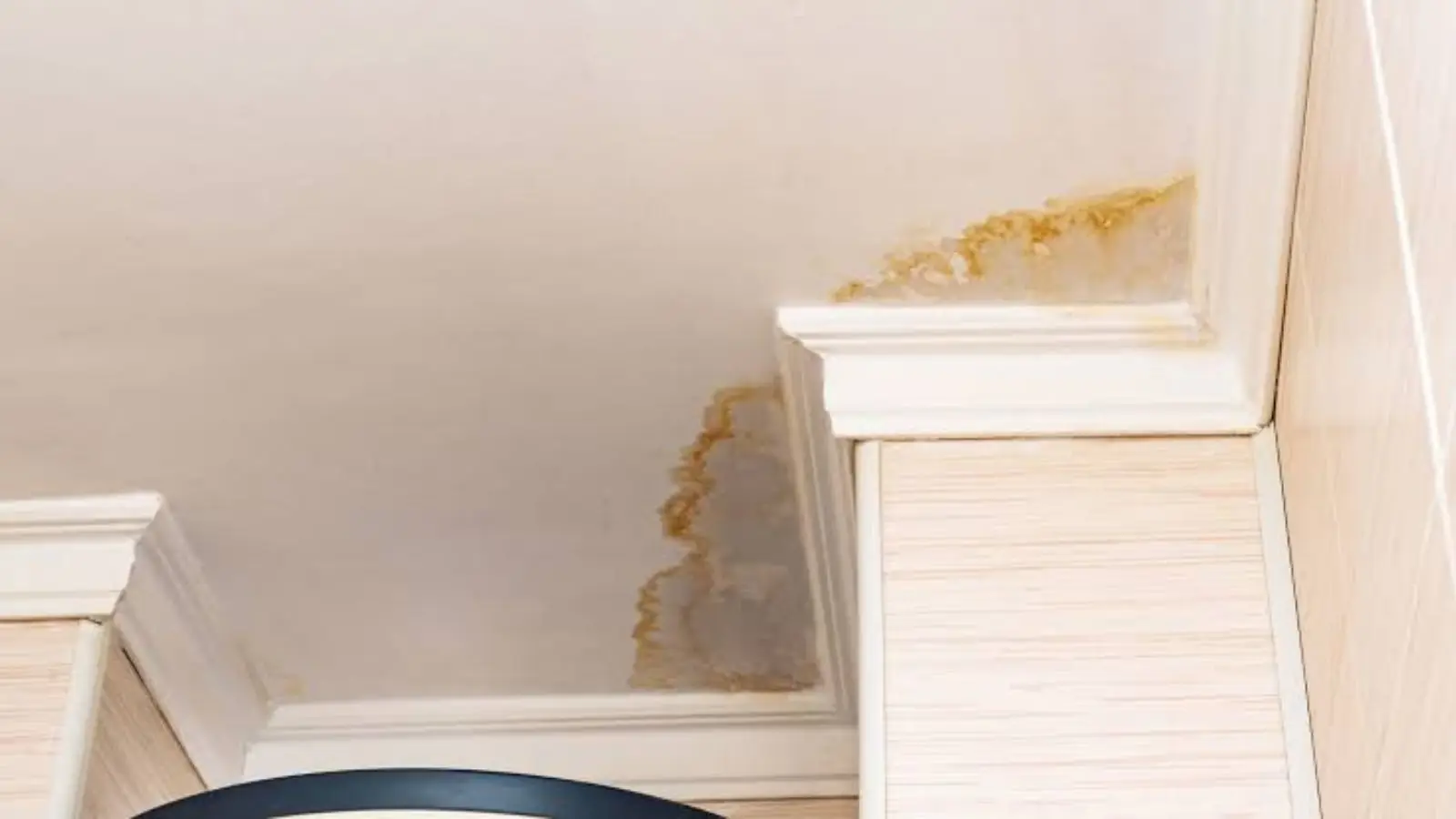
Worry if the stain is damp, growing, soft, sagging or smells musty. Fix it quietly if the area is dry, firm, hasn't changed in weeks, and you have already found the cause. A stain is only a record of past water, so the useful question is whether the water is still coming and whether anything above the paint stayed wet.
Five checks you can do in ten minutes
The paper towel check
Press a dry paper towel on the stain for a few seconds. Any damp feel or color transfer means water is present now.
The thumb check
Press gently near the edge. Firm and cool-dry is a good sign, and soft, spongy or crumbling drywall means it absorbed water.
The pencil mark check
Trace the outer edge with a pencil and a date. If the ring has grown a week later, the leak is active.
The smell check
A musty odor in the room points to long-term dampness above the ceiling, even if the surface looks fine.
The timing check
Note whether the stain darkens after showers, after the dishwasher or washer runs, or only after rain. The pattern names the source.
Do the checks in daylight and on a dry day, and look at the room above as well. A stain below a bathroom, laundry room or air handler is often tied to that fixture. A stain at the top of an exterior wall or under a roof edge points toward the roof.
Reading the result
| What you find | Likely story | Reasonable next step |
|---|---|---|
| Dry, firm, same size for weeks | Old leak that has stopped | Confirm with a moisture meter if possible, then prime and paint |
| Damp or ring grows after a week | Active slow leak | Trace the source before any cosmetic repair |
| Stain appears only after rain | Roof, flashing or exterior wall leak | Roofer first, then dry and repair the ceiling |
| Stain plus musty smell | Long-term moisture above the ceiling | Moisture mapping, and a mold question if growth is visible |
| Soft spot, sag or drip | Saturated drywall, not a small stain anymore | Treat as urgent and follow the drying steps |
A moisture meter reading beats guessing by eye. Surface dryness does not prove the framing above is dry.
Two results deserve extra weight. A stain that grows between checks means water is moving right now, and a stain with a musty smell means moisture has probably been present for a while. Either one justifies a moisture reading before you spend money on paint, and either one makes a call to a trade more useful than another week of watching.
Stain looks small but something feels off?
Describe it on the 24/7 line at (949) 670-0939. Scope and price are explained before work starts.
Why painting over it is the wrong first move
Paint hides a stain. It does not dry the cavity, fix the source, or tell you what is above. If the leak is active, the stain comes back through the paint, often in a larger ring. If the drywall is wet, trapped moisture can support mold behind a fresh coat.
EPA says that painting or caulking over mold does not fix it, and that dried-out materials are the best defense because mold needs moisture. Dry first, repair the source, then finish. A step-by-step approach to rebuilding the area is described under water damage repair.
If the stain really is old and dry
A dry, firm stain with a repaired source is a cosmetic job. Most homeowners can finish it in an afternoon with a small kit. The order matters more than the skill involved.
- Confirm the area is dry with a moisture meter, or at minimum with a week of unchanged paper towel and thumb checks.
- Lightly sand any rough or flaking paint and wipe the dust away.
- Brush on one or two coats of stain-blocking primer, extending a few inches past the ring.
- Paint the whole ceiling plane, or at least corner to corner, so the patch does not show as a halo.
- Mark your calendar to look again after the next heavy rain or the next week of heavy fixture use.
That last step is the one people skip. A repair that survives the next storm or the next laundry week is a repair that worked. If the ring returns, you have not found the source yet.
When a small stain includes visible growth
If you see fuzzy or speckled growth on or around the stain, treat it as a moisture problem first. EPA guidance says a patch under about 10 square feet can usually be handled by the homeowner, while larger areas or growth combined with a lot of water damage call for professional help. Sampling is usually unnecessary when mold is visible, and no federal limits exist for mold or spores.
A crew following ANSI/IICRC S520 practice contains the area and removes the growth. See the details under mold remediation. Questions about health effects belong to a physician, and you cannot tell what is growing by its color.
Rain timing and small stains in Laguna Niguel
The city's hazard plan puts average rainfall at about 13.1 inches a year and calls it feast or famine, ranging from one-third to more than double the norm. NOAA's 1991 to 2020 normals for nearby Laguna Beach show the wet months running roughly November through March, with January and February the wettest. Summer months are close to dry.
That pattern helps you read a stain. If it appears or grows only in winter, suspect the roof, flashing, stucco or a window. If it shows up in July, suspect plumbing, an air conditioner condensate line or a water heater. Note the date you first see it and bring that detail to the roofer or plumber.
Residents of Aliso Viejo and Mission Viejo can use the same checks, since both sit within our dispatch area around Laguna Niguel.
Small stain questions
No. Many stains record a one-time event, like a failed fitting that was fixed. The checks above tell you if it is still active. If the stain is dry, firm and unchanged, it may be history.
Old stains tend to be dry, with a sharp edge that has not moved. Mark the edge with a dated pencil line and look again in a week. A moisture meter gives a better answer than your eyes.
Yes. Water can travel along joists and pool in insulation, so the visible stain may be the only place it reached the drywall. That is why smell and growth over time matter more than the size of the ring.
Not always. If the area is dry and the source is fixed, many homeowners prime and paint it. Call a crew if the stain grows, smells, sags, or keeps returning.
Winter is the rainy season here, so a stain that appears after a storm often points to the roof or exterior. Ask a roofer to check flashing and tiles, and dry the ceiling before repainting. If it returns after dry weather, look at the plumbing instead.