
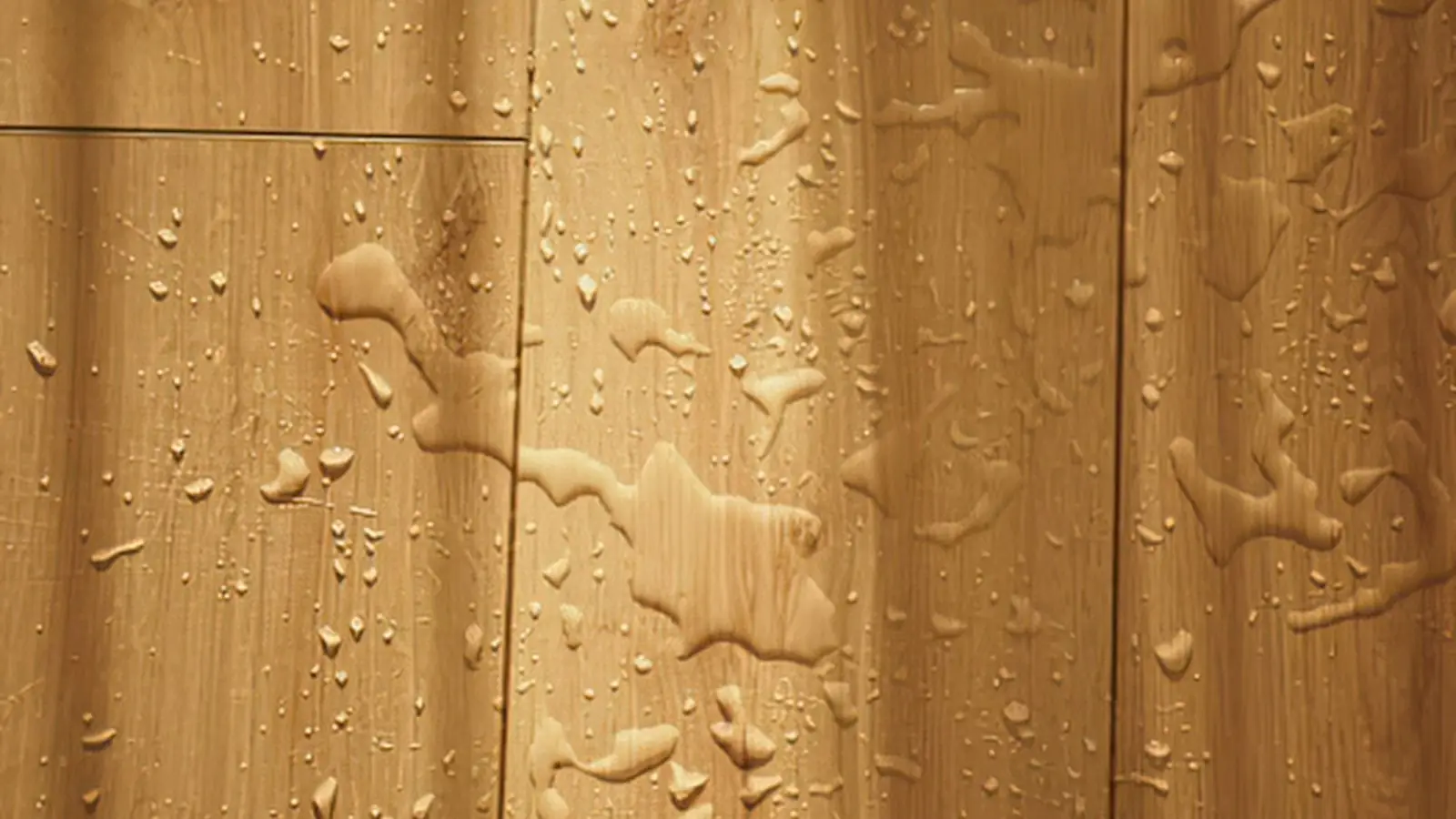
Yes, often. A solid hardwood floor that cupped or darkened after a clean-water leak can usually be sanded flat and refinished, as long as it dried completely and the boards are thick enough to take the sanding. Floors that buckled, delaminated, or sat in dirty water more often need partial or full replacement.
This is the decision stage. It assumes the water is gone and drying has been done and measured. If the floor is still wet, the first priority is drying, not repair.
Dry first, and prove it
Sanding a floor that still holds moisture locks in trouble. The boards keep shrinking after the finish goes on, and gaps, crowning and peeling follow. A floor is ready for repair when moisture readings are steady across several days and match an unaffected reference area in the same house.
Ask your restoration crew for those readings in writing, or at least a list of the dates and numbers. A flooring contractor should not start until you can show them.
Four outcomes and what decides each
| Floor condition after drying | Likely path | What decides it |
|---|---|---|
| Mild cupping, no stains, solid hardwood | Sand and refinish | Thickness of wood above the tongue and groove, plus how flat it settled |
| Dark stains or gaps in a few boards | Replace those boards and blend the finish | Whether new wood can match the age, color and species of the old |
| Engineered planks with lifted edges or peeling veneer | Replace the affected area | The thin top layer cannot be re-sanded much, and the glue bond may have failed |
| Buckled sections, or a floor that sat in contaminated water | Remove and replace, then check the subfloor | The floor may be unsafe to refinish, and porous material that held dirty water is usually discarded |
A floor that is cupped but dry often settles over weeks. Rushing the sanding is the most common way to turn a savable floor into a crowned one.
What sanding can and cannot fix
Sanding removes a thin layer of wood and the old finish. It can level mild cupping, lift shallow stains and bring back an even color. It cannot rebuild swollen fibers, close wide gaps, or fix boards that have split along the grain.
Solid hardwood can take several refinishes over its life, but each pass uses up some wood. If the floor was already sanded once or twice, ask your contractor how much is left above the nails.
Patching boards without a visible scar
Replacing a few boards sounds simple, and it is, until the new wood meets the old. Aged hardwood has darkened from years of light, and a fresh board will look pale next to it. Contractors weave new boards into the pattern, then sand and stain the whole room so the transition falls at a doorway or threshold.
Homes built decades ago may have narrow strips or a species that is hard to source. Ask to see a sample board against your floor before anything is installed.
Reputable crews follow the published ANSI/IICRC S500 standard for water damage restoration, and the S520 standard for mold. You can ask any company which standard guides its drying and containment decisions.
Floor dried but still not sure what to do?
Call (949) 670-0939. The 24/7 line is open, and scope and price are explained before work starts.
Look under the floor before you finish it
A floor is only as good as what it sits on. Plywood subfloor can swell, delaminate and hold moisture long after the boards above feel dry. Concrete slabs release water slowly and can push moisture up through the planks for weeks.
Your contractor should check the subfloor with a meter and by eye, and replace any panels that are soft or sagging. If the leak came from a pipe, the plumbing fix should be completed first.
Questions for the flooring contractor
- What is the moisture reading of the floor and subfloor today, and how was it taken?
- Is my floor solid or engineered, and how much wear layer remains?
- If you replace boards, how will the new finish match the old?
- What will you do if gaps open or cupping returns after the finish cures?
- Is your CSLB license current, and does it cover flooring work?
California's contractor board has no license class for water damage drying, but it does license flooring work. CSLB requires a license for jobs of $1,000 or more in labor and materials combined, and homeowners can verify one with the License Check tool at cslb.ca.gov. Pay no more than 10 percent down or $1,000, whichever is less, with limited exceptions listed by CSLB.
For the rebuild stage in general, see water damage repair. If the floor is not yet dry, early water damage cleanup and drying come first.
Floors in Laguna Niguel: home values and older housing
Census QuickFacts for 2019 to 2023 puts the median home value in Laguna Niguel at $1,123,000. At that level, a clumsy patch or a floor with a visible repair can hurt resale appeal, so matching quality matters. A cheaper fix that shows is not always the cheaper choice.
The city's housing element reports most units were built before 1990. In a house of that age the floor may be solid hardwood, which can take sanding, or it may have been replaced with engineered planks. Your contractor should measure the wear layer instead of assuming.
If you own a condo or townhome, flooring changes may require association approval, and many associations set underlayment or sound rules. Read your CC&Rs and ask your association before you order materials.
Owners in Laguna Beach and Laguna Hills can use the same checklist. Insurance wording matters too. Sudden and accidental water damage is often covered, gradual leaks often are not, so ask your insurer what applies to your floor.
Questions about saving a floor
Moisture readings should be stable for several days and close to a dry reference floor in the same house. Visual flatness is not enough. Ask for the numbers before any sanding begins.
Rarely in full. Buckled boards have lifted off the subfloor, and sections usually need removal. If only a few boards lifted and the subfloor is sound, a partial replacement may be enough.
Often, but not always. The price depends on room size, wood type, how much sanding is needed, and the finish. A real number comes from a scope after assessment, so get it in writing.
It depends on your policy and the cause of the water. Sudden and accidental damage is often covered, gradual leaks often are not. Ask your insurer, and keep photos and receipts. California regulations require insurers to acknowledge a claim within 15 calendar days and to accept or deny within 40 calendar days after proof of claim, so ask your insurer about timing.
Flooring alone often does not need a city permit, but the answer depends on the work. Call the Building and Safety Division at City Hall before the job. Condo and townhome owners should also check their CC&Rs and ask their association about underlayment rules.