
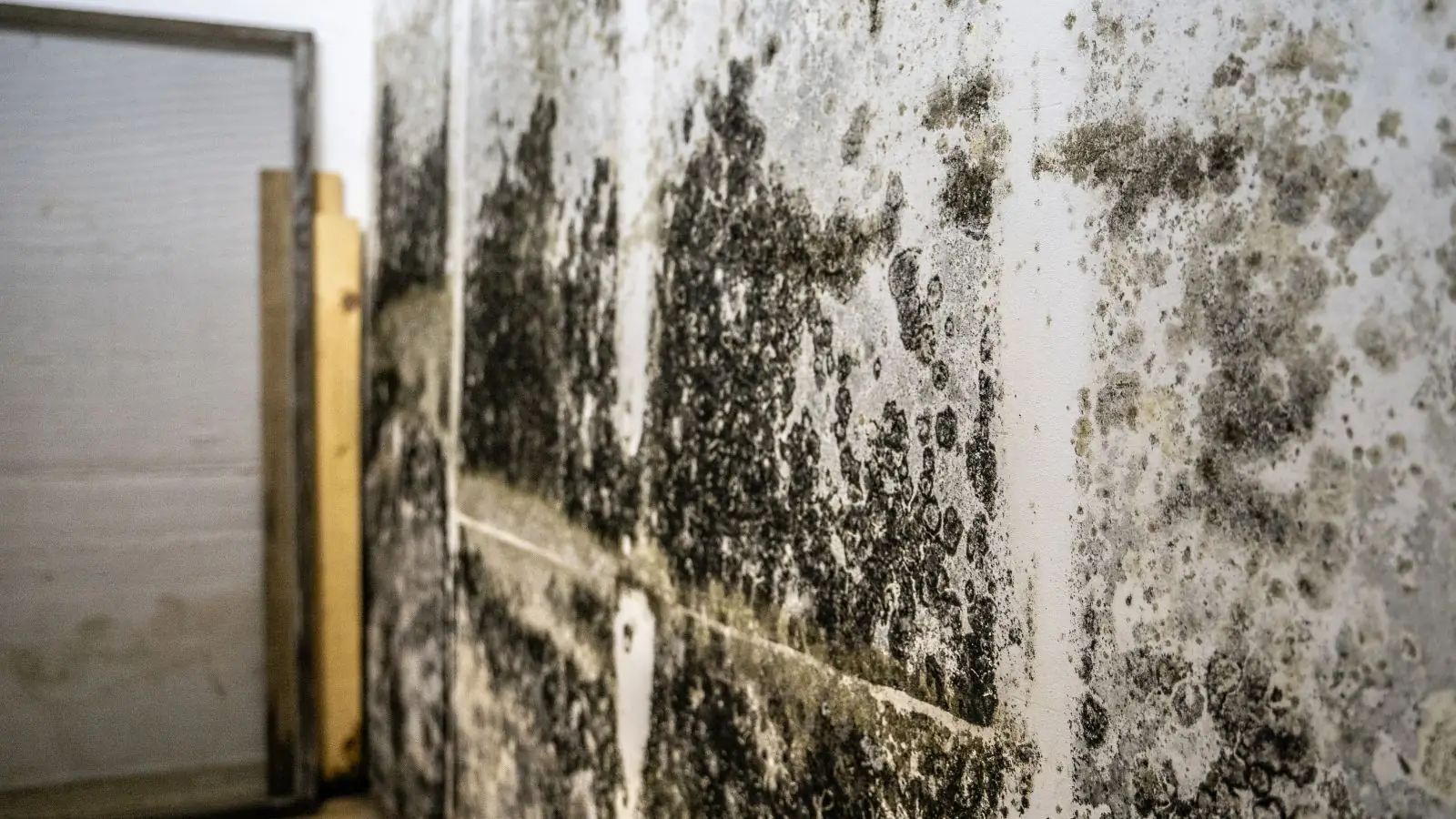
Most homes here are built on a slab or a raised foundation, so a true basement is uncommon. That does not remove the risk. Mold needs moisture and an organic surface, and garages, lower-level rooms cut into a slope, and crawl spaces can supply both. If you smell something musty or see spotting at the base of a wall, look for the water before you look for a cleaner.
EPA says mold growth is usually avoided if wet materials are dried within 24 to 48 hours. In a garage nobody walks through daily, a slow leak can go well past that window.
Where moisture hides in homes without basements
| Place | Common moisture sources | What to check |
|---|---|---|
| Attached garage | Water heater or softener leaks, washer hookups, rain under the door, condensation on cold pipes | Floor around appliances, the base of shared walls, boxes stored on the floor |
| Lower level cut into a slope | Soil against walls, drainage that sends water toward the foundation, a failed pipe | Wall bases, baseboards, musty odor in closets, efflorescence on masonry |
| Crawl space or raised foundation | Plumbing leaks, blocked vents, grading that points toward the house | Insulation sagging, wood framing that looks dark, standing water after rain |
| Slab-on-grade ground floor | Slab leaks, plumbing in walls, water entering at door thresholds | Warm spots on the floor, wet carpet edges, a meter that runs with fixtures off |
These are places to inspect, not a diagnosis. A home inspector or restoration professional can measure what you cannot see.
What about coastal humidity?
People near the coast often blame the air for every musty smell. No sourced humidity data for Laguna Niguel is cited here, so this post does not claim the air alone causes mold. Ask your home inspector about indoor humidity in your own house, since it varies by room, ventilation and season.
A basic hygrometer costs little and gives you a number to track in the garage and any lower room. Pair it with a visual check after each storm.
Crawl spaces and raised foundations
A raised foundation leaves a gap between the soil and your floor framing. Plumbing runs through that gap, and a small supply or drain leak can drip for months without a stain showing indoors. The first clue is often a musty smell near a floor register or a floor that feels slightly soft.
Crawl space access is tight and the air can be stale, so do not send a family member down without a light, gloves and a mask. If you see standing water, wet insulation or dark growth on framing, stop and have the space assessed. A restoration crew can map moisture with a meter and dry the cavity before any rebuild.
What to do once you find it
Find and stop the water
Check pipes, appliances, the roof edge and grading near the wall. Fix the supply or drain before cleaning anything, or the growth returns.
Dry and remove what cannot be cleaned
Wet cardboard, insulation and soft drywall hold moisture. Remove them with gloves and a mask, bag them, and let the area dry fully.
Size the problem honestly
EPA says an area under roughly 10 square feet, about a 3 by 3 foot patch, can usually be handled by the homeowner. Larger areas, or any mold after sewage or contaminated water, call for a professional.
Bring in remediation when the scope is bigger
Remediation follows ANSI/IICRC S520 practice: containment, removal, cleaning and a check that moisture is gone. Ask the company whether its crews work to that standard.
Musty garage or lower room?
Call (949) 670-0939 to talk through what you found. The 24/7 line is open, and scope and price are explained before work starts.
Habits that keep garages and lower rooms drier
Simple prevention
- Store boxes on shelves or pallets, not directly on the floor or against exterior walls.
- Replace cardboard with plastic bins when you keep clothes, papers or holiday items in the garage.
- Check the hose, washer valves and water heater connections every few months.
- Look at grading and gutters after heavy rain, and move downspouts away from the foundation.
- Run a hygrometer in the garage and lower rooms, and note readings after storms.
- Do not paint or caulk over mold. EPA advises fixing the moisture first.
Testing, health questions and selling a home
EPA says sampling is usually unnecessary when mold is visible, and there are no federal limits for mold or mold spores. Surface sampling may help show whether an area has been cleaned adequately. Ask about independent clearance testing after remediation if you are buying or selling, since a buyer's lender may request it.
Questions about how mold affects your health belong to a physician. Mold identification by color is not reliable, so we do not guess from photos. For the process itself, see how mold remediation is handled, and why fast water mitigation can keep a wet garage from becoming a mold job.
Moisture in Laguna Niguel: rain, slopes and ponding
The city's hazard plan says Laguna Niguel averages 13.1 inches of rain a year, with a feast-or-famine pattern that has ranged from one-third to more than double normal. In a wet winter, a garage door that sheds water in a dry year may let it pool. Walk your garage after the first big storm each season.
The city's environmental report notes that most of Laguna Niguel is outside mapped flood zones, though localized flooding and ponding can still occur during large rain events. That fits garages and low yards, which collect water even where the neighborhood is not in a flood zone. Check the FEMA flood map for your address.
Parts of the city are hillside terrain, and the city's general plan identifies landslide zones in places. If your lower level is built into a slope, ask your city building department and a licensed professional about drainage behind the wall.
If you are comparing situations in nearby towns, Dana Point and Aliso Viejo have their own housing mixes, and the same moisture logic applies.
Garage and lower-level mold questions
True basements are uncommon. Most homes sit on a slab or a raised foundation. Some hillside houses have lower levels cut into the slope, and those can act like a basement for moisture.
EPA says patches under about 10 square feet can usually be cleaned by the homeowner, using gloves and a mask after the moisture is fixed. Contaminated water, large areas or repeated growth call for professionals.
EPA says sampling is usually unnecessary when mold is visible. Testing may be useful after cleanup to check the work, particularly for a sale or loan. Ask an independent tester, not only the remediation company.
It lowers humidity but does not fix a leak or wet materials. Use it as a support tool after the source is stopped and the wet items are removed.
No local humidity figure for your address is cited here. Ask your home inspector to measure humidity in the garage and lower rooms, and watch for musty smells after storms.