
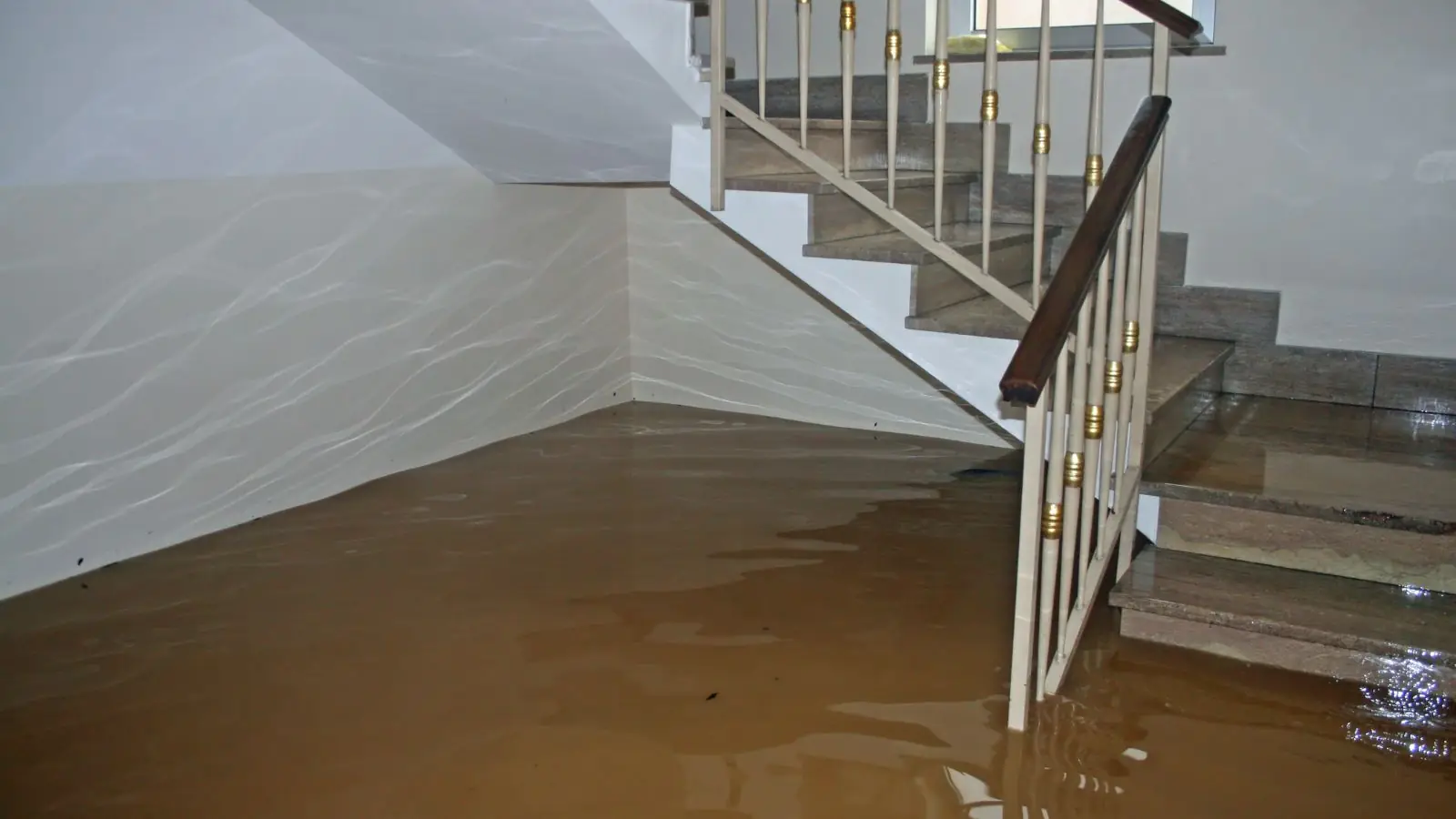
Lower-level restoration means getting water out of a space that sits at or below the surrounding grade, then removing what cannot be saved and drying the rest. In Laguna Niguel that space is usually an attached garage, a walkout or daylight level on a sloped lot, or a crawl space under a raised foundation. A true basement is uncommon here, so be wary of advice written for homes with deep cellars.
Water in a low space is rarely just a puddle. It soaks drywall at the base, wicks into framing and can sit under flooring where you cannot see it.
Safety before anything else
If water has reached outlets, a panel or an appliance plugged in at floor level, stay out. Cut power only if the panel is dry and safe to reach, and call 911 or your electric utility first. Sewage in the water, a smell of gas (call SoCalGas), or deep standing water means leave the area and keep people and pets out.
Where the water comes from
Rain and runoff
A heavy storm can send water down a driveway or slope and under a garage door. Blocked drains and soil that tilts toward the house make it worse.
A failed supply line or tank
Water heaters, washer hookups and softener lines often sit in garages. A split connection can release a lot of clean water before anyone notices.
Backed-up drains
A clogged sewer lateral or a floor drain that fills from below brings Category 3 water into a low room. That changes everything about cleanup.
Groundwater or slope seepage
Water pressing against a lower wall can seep through cracks or joints. This is a drainage problem that restoration can dry but cannot fix.
The order of work in a low space
Assess the water and the hazards
The crew identifies the water category under ANSI/IICRC S500, checks for electrical risk, and decides whether people and pets can stay in the house.
Pump and extract
Submersible pumps clear deep water and truck-mounted or portable extractors take what the pump leaves. Getting the standing water out quickly limits how far it wicks.
Remove what will not dry
Wet carpet pad, saturated insulation and soft drywall at the base are cut out. If the water was contaminated, porous materials are discarded and surfaces are cleaned and sanitized.
Dry, monitor and verify
Air movers and LGR dehumidifiers run while the crew logs moisture readings. The job ends when the structure reads dry against a reference, not when it feels dry.
When you call, describe where the water came from, how deep it is, and whether anything electrical sits in it. Mention if the water smelled foul or came up through a drain. Those details tell the crew which equipment to bring and whether the job is a clean-water pump-out or a contaminated-water cleanup.
Keep a short list of what was stored in the space. Garages often hold paperwork, tools and keepsakes that you will want to photograph before they are moved.
Water below grade right now?
Call (949) 670-0939. The 24/7 line is open, with same-day response when available and scope and price explained before work starts.
What stays and what goes
| Item | Clean water, caught quickly | Contaminated water or long exposure |
|---|---|---|
| Concrete slab and masonry | Dry and keep | Clean, sanitize and dry |
| Drywall at the base | Often cut a strip above the wet line and dry the cavity | Remove and replace |
| Carpet and pad | Pad usually discarded, carpet sometimes dried | Discard |
| Stored cardboard and fabric | Usually lost if soaked | Discard |
| Wood framing | Dry and verify with a meter | Clean, dry, and check for damage |
| Furniture and finished contents | Case by case | Often not worth saving |
Category 1, 2 and 3 water are defined in ANSI/IICRC S500. Insurance and photographs work best when you record items before they leave the house.
Restoration is not waterproofing
Restoration dries and repairs what the water damaged. It does not stop water from coming back. If the cause was groundwater, a slope that drains toward the house, or a failed retaining wall, you need a drainage or waterproofing specialist, and perhaps a licensed general contractor or plumber.
Ask for the cause in writing before you rebuild. Rebuilding a wet low room without fixing the source is how the same loss happens twice. When you are ready to hire for the work, check each license on CSLB's License Check tool.
Flood coverage and your insurer
The California Department of Insurance says standard homeowners policies do not cover flood damage, though they do cover other kinds of water damage. Flood needs a separate policy, so check yours before you assume. A burst pipe in a garage and a storm flowing under the door can be treated differently.
California regulations set claim deadlines that insurers must follow, including acknowledging a claim within 15 calendar days and accepting or denying it within 40 calendar days after proof of claim. Ask your insurer how they apply to your claim.
Lower levels in Laguna Niguel: creeks, ponding and slopes
The city describes Sulphur Creek as a major tributary draining most of the northern city, and says two forks of Salt Creek flow south through the southern half. Aliso Creek only brushes the northwest border. If you live near a creek corridor, check the FEMA flood map for your address before you assume you are covered or exposed.
The city's general plan says FEMA's 100-year flood hazard areas appear in several locations and a few northern areas have 0.2 percent annual chance flooding. The rest of the city is described as having minimal flood risk. Even so, the city's environmental report notes localized ponding can occur during large rain events, which is what hits a garage.
City Public Works maintains public streets and storm drains, so a blocked street drain after a storm is worth reporting. Ask your city building department about permit needs before rebuilding a lower level.
Owners in Mission Viejo and Laguna Beach deal with different terrain, but the same sequence applies. For the major event scale, see flood damage restoration, and for pumping first, see emergency water removal.
Lower-level water questions
Yes, the steps are similar: extraction, removal of wet materials, drying and monitoring. Garages often have concrete, which dries well, but stored items and attached walls need attention.
No. Restoration repairs and dries after water damage. Waterproofing and drainage work to prevent entry belongs to a specialist in that trade, so ask for one before rebuilding.
Pumps for deep water and drying equipment should be run by trained crews, because water category, electrical safety and moisture mapping drive the decisions. This is not a rental business.
It depends on the water category, the depth and how long materials stayed wet. EPA guidance says to dry within 24 to 48 hours to prevent mold, and daily readings show when drying is complete.
Check the FEMA flood map for your address, because zones are not citywide. The city says most of the city is outside the flood hazard zones, but localized ponding can still happen. Ask your insurer about flood coverage.