
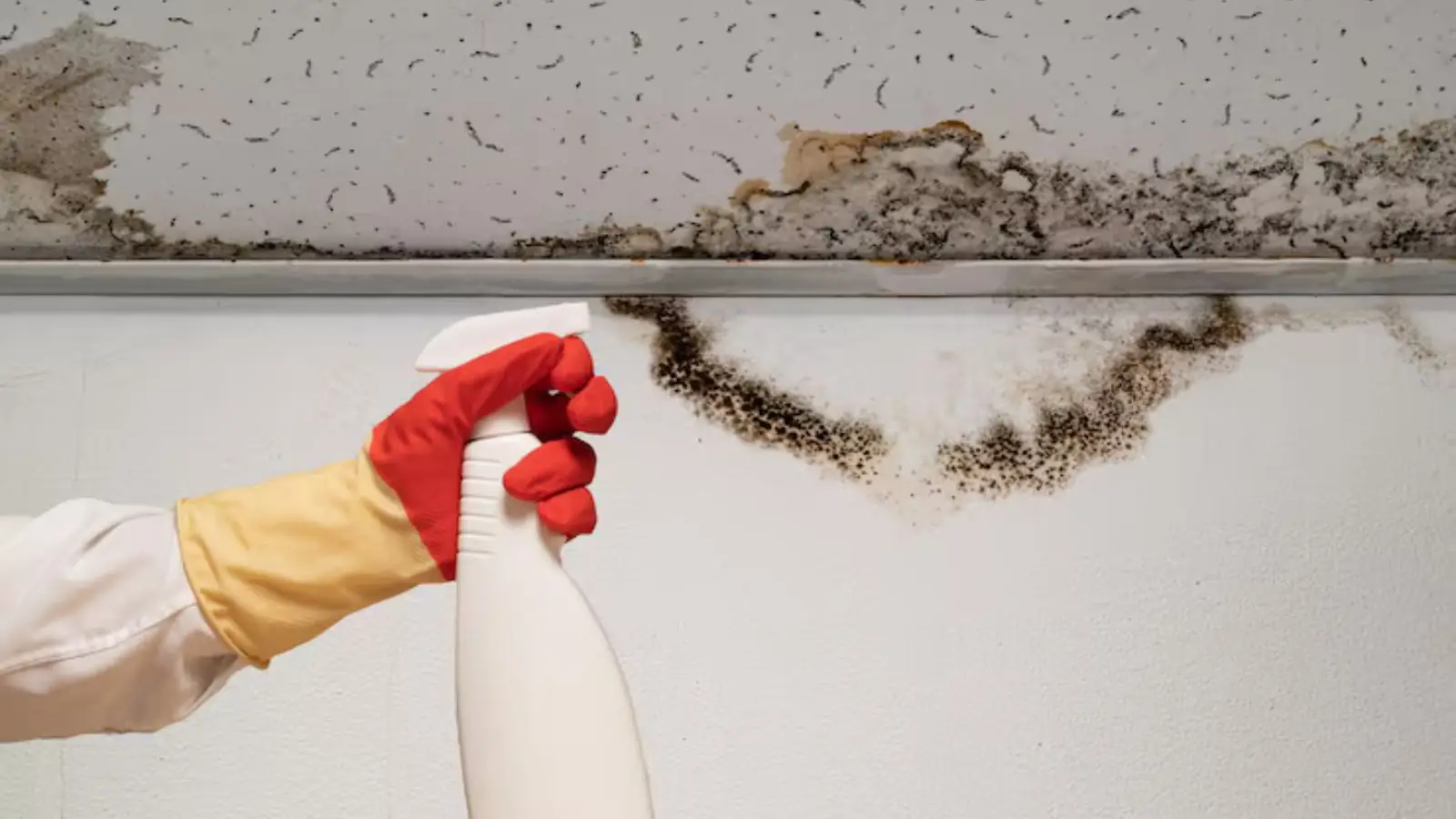
Mold on a ceiling is a sign of moisture, and moisture is the problem to solve. We cannot diagnose anything from a photo, and nothing on this page speaks to anyone's health. Questions about how mold affects a specific person belong with a physician.
What you can decide yourself is how big the patch is and where the water came from. EPA's cleanup guidance says an area under about 10 square feet, roughly a 3 ft by 3 ft patch, can usually be handled by the homeowner. A bigger area, a wet or sagging ceiling, or contaminated water means stopping and bringing in a professional.
What mold above your head is telling you
Mold needs moisture and a surface that stays damp, which is why a ceiling patch almost always has a wet cause behind it. Cleaning the visible spot without finding that cause only treats the surface. The stain may be old and dry, or the leak may still be active above the drywall.
Callers often mention a recent leak from a toilet, a sink, an air conditioner condensate line, the roof or siding. Those are the usual suspects, and each one points to a different trade to call first.
Roof or siding leak
Stains tend to spread after rain and sit near exterior walls or under penetrations. A roofer finds the entry point, and a drying crew handles the wet drywall.
Upstairs plumbing
Toilets, tubs, sinks and supply lines on the floor above can drip into the ceiling below. A plumber confirms and fixes the source.
Condensate line
A clogged air conditioner drain line can overflow into the attic or ceiling space. An HVAC technician clears or replaces it.
Poor ventilation
Steam from a bathroom with a weak or unvented fan can leave a ceiling damp over time. Fixing the airflow stops the repeat dampness.
How to size it up before you touch anything
Stop the water
If a pipe is leaking, close the house shut-off valve or the angle stop at the fixture. If rain is the cause, protect the area and call a roofer once it is safe.
Look, do not scrub
Scrubbing or sanding spreads material around the room. Note the size, color and whether the ceiling feels soft, bulges or drips.
Photograph with a measuring tape
Take pictures from several angles with a tape or ruler in frame. Photos help a contractor, an insurer or a lender understand what you found.
Compare the patch to 10 square feet
Under about a 3 ft by 3 ft patch with a fixed cause is within what EPA says homeowners can usually handle. Anything larger goes to a professional.
| What you see | Reasonable first move | Who usually handles it |
|---|---|---|
| Small dry patch under about 10 sq ft, cause already fixed | Clean hard surfaces with detergent and water, per EPA, and dry fully | You, with gloves, eye protection and a respirator as EPA suggests |
| Patch larger than 10 sq ft | Do not disturb it, document it, and get an assessment | A mold remediation professional |
| Ceiling sagging, bubbling or dripping | Stop the source, keep people out from under it, call for drying | Plumber or roofer first, then a drying crew |
| Water came from a sewer or contaminated source | Stay out and call a professional with contaminated-water experience | A professional crew |
| Stain returns after cleaning | Assume the moisture source is still active and investigate | Plumber, roofer or HVAC technician |
Not sure how far the moisture goes?
Call (949) 670-0939 and describe what you see. The 24/7 line is open, and scope and price are explained before work starts.
Why ceilings show it first
Ceilings sit under roofs, attics and upstairs plumbing, so water often arrives from above and lingers in insulation. Drywall and paper facing hold dampness well. A small leak can feed one spot for weeks before a stain appears.
That hidden stage is why the visible patch may be smaller than the wet area. If a ceiling felt damp or stained recently, water mitigation addresses the wet materials before they become a bigger repair.
Do not paint over it
EPA says not to paint or caulk over mold. Stain-blocking primer hides the color but leaves the moisture and the growth underneath. If the damp continues, the spot tends to show through again.
Bleach is also not the shortcut people expect. EPA guidance for homes generally recommends detergent and water for hard surfaces rather than routine biocide use. Porous materials such as ceiling tile or soaked drywall often cannot be cleaned and may need removal.
When testing makes sense
EPA says that when mold is visible, sampling is usually unnecessary, and no EPA or other federal limits have been set for mold or mold spores. Surface sampling can help show whether an area was cleaned adequately afterward. Sampling should be designed and read by experienced professionals.
Mold remediation and testing follow ANSI/IICRC S520, the published industry standard, and you can ask any company whether its crews work to it. A buyer's lender sometimes asks for mold removal documentation, which is a separate reason for testing.
Call a professional when
- The affected area is larger than about 10 square feet
- The ceiling is wet, sagging or dripping now
- The water involved sewage or another contaminated source
- You cannot find or fix where the moisture is coming from
- A lender, buyer or landlord is asking for documented remediation
Rain, Roofs and Permits in Laguna Niguel
The city's hazard plan says Laguna Niguel averages 13.1 inches of rain a year, with rainfall that has ranged from one-third to more than double normal. NOAA's Laguna Beach normals put the wetter months from roughly November through March. A roof flaw can sit unnoticed through dry years, so check your ceilings after the first big storm of the season.
FEMA advises owners to check with local building officials before repairs, since permits may be needed for roofing, walls, plumbing and HVAC. The city's Building and Safety Division is at City Hall, 30111 Crown Valley Parkway. Ask them whether your roof or ceiling repair needs a permit before work begins.
Where to go from here
If the patch is large or the ceiling stays wet, mold remediation means containing the area, removing affected material and drying the space. We dispatch from Laguna Niguel and also serve homes in Laguna Hills and Mission Viejo.
Ask your insurer what your policy says about sudden and accidental leaks compared with gradual ones. Check your policy before assuming either way.
Ceiling mold questions
No. Color cannot confirm what kind of mold you have or how a person might be affected. Size, moisture and materials are what guide the cleanup decision, and health questions go to a physician.
For a small patch with a fixed leak, EPA describes cleaning hard surfaces with detergent and water. Porous ceiling materials may need to be removed. Do not scrub a large patch, because that spreads material through the room.
EPA says sampling is usually unnecessary when mold is visible, and there are no federal limits to compare results against. A better use of money is finding and fixing the moisture source.
Coverage depends on the cause and your policy. Sudden and accidental water damage is often covered, while gradual leaks and neglect often are not. Ask your insurer, and photograph the damage before anything is removed.
Start with the city's Building and Safety Division at City Hall, 30111 Crown Valley Parkway. Ask whether roofing or ceiling work at your address needs a permit, and confirm any contractor's license on CSLB's License Check tool.