
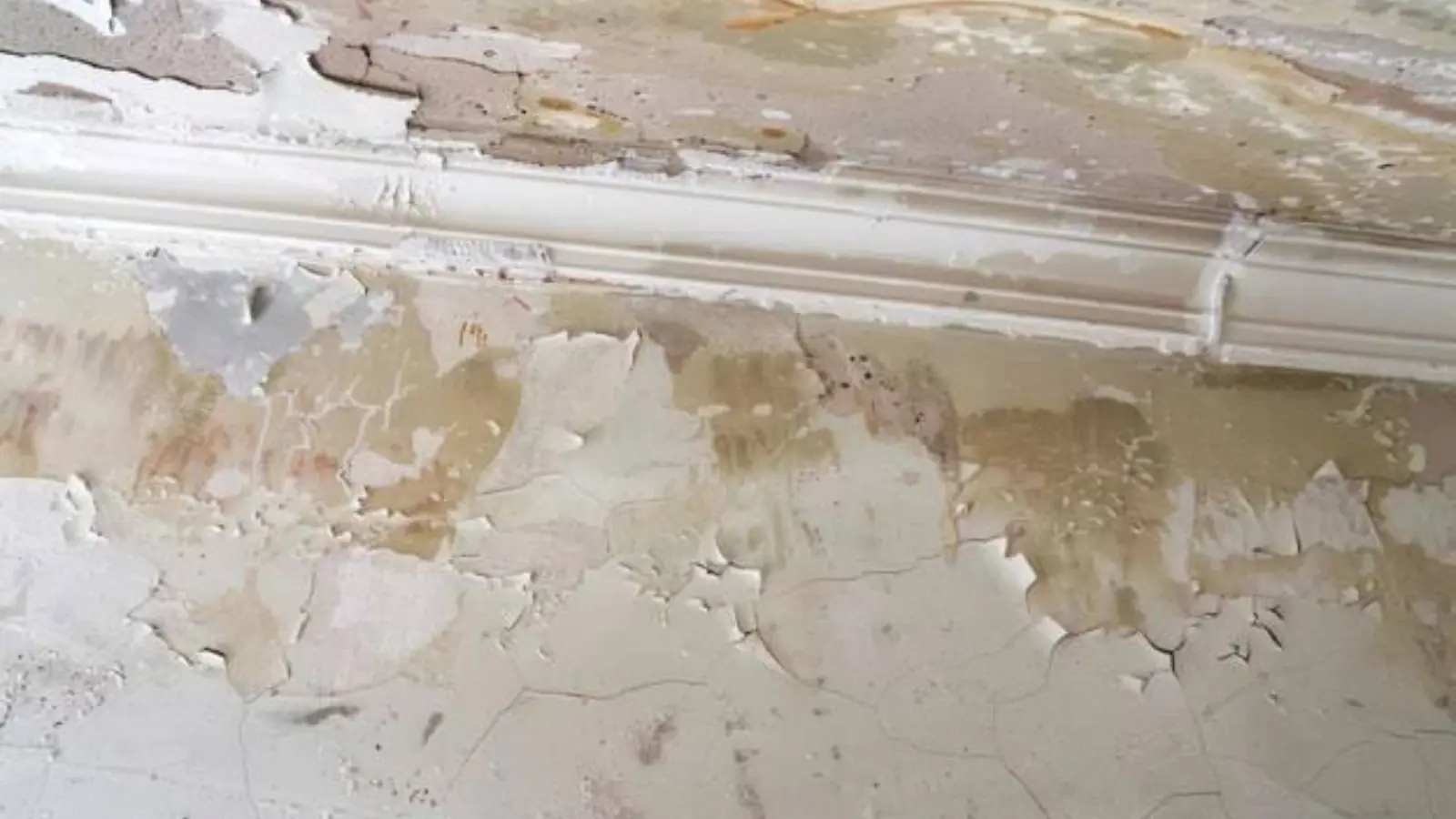
Drywall that was wet from a clean water source and caught early can often be dried where it stands. Drywall that is soft, sagging, crumbling at the edge or stained from dirty water usually has to be cut out and replaced. The difference is not visible to the eye alone. A moisture meter and a thermal camera show how far the water traveled inside the wall.
This post is about vertical wall surfaces in your living areas, hallways and bedrooms. Ceilings behave differently because gravity pulls the water through them, so they are a separate repair. If you see wall damage and also water on the floor, stop the source first, then read on.
Dry in place or cut it out
Gypsum board is a paper-faced panel, and paper holds water like a sponge. Once the paper loses its bond with the gypsum core, the panel cannot regain its strength. That is why a stain that has dried to a pale brown ring still deserves a closer look before anyone paints over it.
The table below lays out the usual decision. A restoration crew confirms it with readings, not guesses.
| What you see | Usual path | Why |
|---|---|---|
| Damp wall, clean source, found the same day | Dry in place with air movers | The panel is still firm, so airflow and dehumidification can pull the moisture out of the board and cavity. |
| Bubbling paint or a soft spot you can dent with a thumb | Cut out the affected panel section | The core has lost strength and will not tighten up again after drying. |
| Wet baseboard or a swollen bottom edge | Remove the trim, open the wall low, then decide | Water wicks upward from the floor line and often hides behind the baseboard. |
| Wet from a drain, toilet overflow or outside flooding | Remove and discard the wet board | Contaminated water soaks into porous material that cannot be reliably cleaned. |
| Visible fuzzy growth on the paper | Stop and plan containment first | Disturbing growth spreads spores. EPA says cleanup beyond about 10 square feet calls for professional help. |
Water category matters. ANSI/IICRC S500 defines Category 1, 2 and 3 water, from a clean source through gray water to contaminated or sewage water.
What a moisture check actually looks for
A pin or pinless meter reads moisture in the surface and a few layers below it. A thermal camera shows cold, wet zones as color differences on the wall. Neither tool is a verdict on its own. The crew compares readings against a dry wall in the same room to see what normal looks like in your house.
The insulation and the bottom plate inside the wall matter as much as the board. Fiberglass batts hold water against the back of the panel, so a wall that feels dry on the surface can stay wet inside for days. Small test holes or a removed baseboard let the crew look and measure before anything is sealed.
Stop the source and cut the loading
Shut the water at the fixture valve or the house shut-off, then pull furniture and wall hangings away. Sort out whether the leak was a supply line, a drain or something outside.
Open the wall to dry the cavity
Remove baseboards and, if needed, a strip of board just above the wet line. Air movers and a dehumidifier then work on the open cavity instead of the face of the wall.
Replace only what failed
New board is cut to fit between framing, taped, and finished with joint compound. Insulation that stayed wet is replaced, and framing is checked with the meter before closing.
Prime, texture and paint
Fresh compound needs primer so it does not flash through the paint. Matching an existing texture takes practice, and a patch that looks fine in daylight can show under a hallway light.
Not sure if your wall can dry in place?
Call the 24/7 line at (949) 670-0939 for same-day response when available. Scope and price are explained before work starts.
Mistakes that turn a small wall problem into a bigger one
Avoid these until the wall has been measured
- Painting or caulking over a stain. Moisture stays trapped behind the new coat and the paint peels again.
- Closing the wall with a patch before the cavity reads dry against a reference wall.
- Running a household fan at the wall and calling it dried. Fans move room air but do not pull water from inside a cavity.
- Poking a wet outlet or switch box. If water reached an outlet or panel, stay out and call 911 or your utility before anything else.
- Cutting into an older wall without asking a pro whether the texture or compound should be tested first.
Who does which part of the job
Drying the wall and removing wet material is restoration work. Rebuilding it is a trade job. California's contractor license board does not list a water damage or mold classification, but it does license drywall, painting and plumbing work. CSLB requires a license once labor and materials reach $1,000 combined, and you can check any license with the License Check tool on cslb.ca.gov.
If you need both steps, our water damage repair page explains the rebuild stage in detail. The quicker the wall is opened and dried through water mitigation, the more of it can often be saved.
Wall repair in Laguna Niguel: age, permits and the water shut-off
The city's housing element reports that most homes in Laguna Niguel were built before 1990, and about 6,000 units date from before 1980, with older neighborhoods from the late 1960s and early 1970s. In an older house the wall finish may have been layered over several decades. Ask your contractor how they will match it, and whether any materials should be tested before they are cut.
The city's Building and Safety Division handles permits for alterations and repairs, and its page does not address water damage specifically. FEMA tells owners to check with local officials before repairs because permits can apply to walls, plumbing and similar work. Call the department with your address before you close up a wall.
Moulton Niguel Water District says the house shut-off valve is typically at the front of the home just below the hose bib. Know where yours is before the next leak, because a stuck valve is the fastest way to lose a wall.
Townhome and condo owners in nearby Aliso Viejo and Laguna Hills face a similar question about walls shared with another unit. If a wall is shared, the homeowners association decides who handles the repair, so read your CC&Rs and ask your association.
Questions about wet drywall
Paint hides the color but not the moisture. If the source is still active, the stain returns and the paper behind it keeps breaking down. Confirm the wall reads dry against a reference wall, then prime with a stain-blocking primer before painting.
It depends on the water category, how much got in, and whether insulation was soaked. EPA guidance says to dry water-damaged areas within 24 to 48 hours to prevent mold. Daily readings tell a crew when the wall is actually done, not a calendar date.
Sudden and accidental water damage is often covered, while gradual leaks and neglect often are not. Take photos before anything is removed and keep receipts for emergency steps. Ask your insurer what your policy covers, because wording varies.
The size of the wet area, the water category, whether insulation and framing are involved, how many days of drying equipment run, and the finish you want matched. The real number comes from a scope after assessment, not from a rule of thumb.
Small patches often do not, but the answer depends on the scope. FEMA advises checking with local building officials before repairs, and permits can apply to walls and plumbing. Call the Laguna Niguel Building and Safety Division with your address and describe the job.