
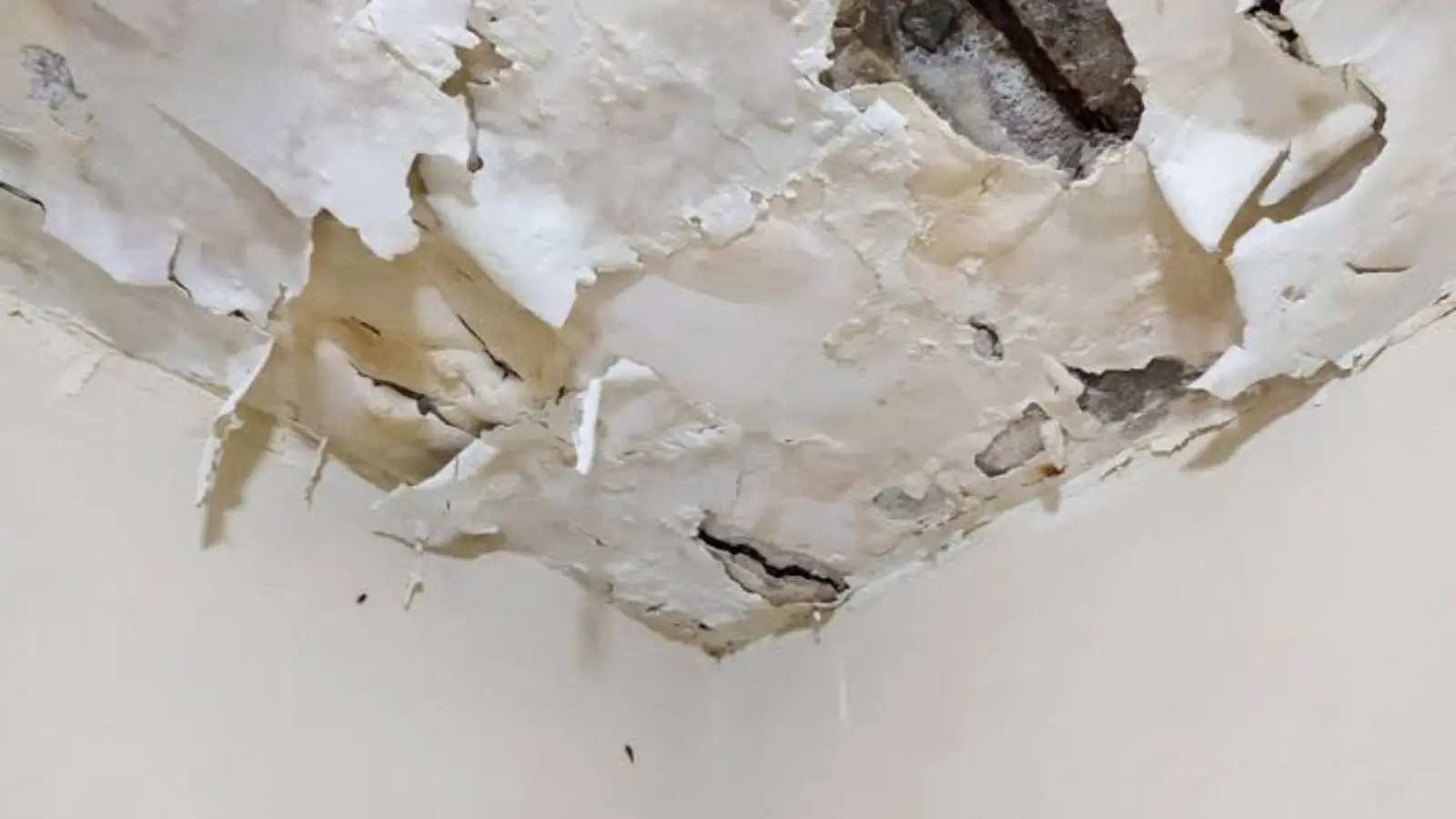
A ceiling repair can cost very little or a great deal, and the gap comes from what is hiding above the paint. A single dry stain needs primer and paint. A saturated ceiling needs drying equipment, new drywall, and sometimes new insulation. We do not quote numbers in an article because the real figure comes from a scope written after assessment of your ceiling.
Five things that move the price
Every quote you receive is built from the same few inputs. If two estimates differ widely, the gap is almost always in one of these rows rather than in one company simply being cheaper.
| Cost factor | How it moves the price | What to ask |
|---|---|---|
| Water category | Clean supply-line water is the simplest. Gray or contaminated water adds removal and sanitizing work. | Which ANSI/IICRC S500 category do you assign, and why? |
| Affected area | More square footage of drywall, insulation and paint means more labor and material. | Is the scope based on moisture readings or on a visual guess? |
| Materials involved | Textured or popcorn ceilings, plaster, and tall or vaulted ceilings take more skill and time. | Will the texture be matched, and is the whole ceiling repainted? |
| Drying days and equipment | Air movers and dehumidifiers run for days and are checked with a meter each visit. | How many days, how many machines, and what reading ends the job? |
| Rebuild scope | Drywall, texture, primer, paint and sometimes electrical or insulation work are separate line items. | What exactly is included, and what would change the price? |
The real number comes from a scope after assessment. A price given by phone without seeing the ceiling is a guess.
Why the same stain can lead to different bills
Picture two ceilings with identical brown rings. One came from a slow drip that stopped months ago, and the drywall underneath is dry and firm. The other is wet from a supply line that failed last night, with soggy insulation sitting on top.
The first is a cosmetic job. The second is a drying job followed by a rebuild, and it moves quickly, because EPA guidance says to dry water-damaged areas within 24 to 48 hours to prevent mold. Waiting to compare quotes can turn the cheaper job into the expensive one.
The three phases that appear on a ceiling invoice
Stopping and drying
Locating the source, extracting standing water, setting air movers and dehumidifiers, and monitoring readings. See how crews handle water damage cleanup when debris or wet materials must come out.
Demolition
Removing sagging drywall and wet insulation so the cavity can dry. This phase is usually priced by area.
Rebuild
New drywall, taping, texture, primer and paint. Details are covered under water damage repair.
Source repair
A plumber or roofer fixes the cause. This is usually a separate trade and a separate bill.
Each phase can be priced separately, and a clear scope lists them separately. That makes it easy to see what you are paying to dry, what you are paying to remove, and what you are paying to make the room look new again. Some homeowners hire one company for drying and a different trade for the finish, which is fine as long as someone confirms the cavity is dry before the new drywall goes up.
Delay changes the phases as well. A ceiling left wet past the first couple of days is more likely to need insulation removal and larger demolition, and any visible mold adds a remediation question to the bill.
Want a scope instead of a guess?
Call (949) 670-0939. Scope and price are explained before work starts, and the line is open 24/7.
Insurance and who pays
Sudden and accidental water damage, such as a burst pipe or a failed supply line, is often covered by homeowners insurance. Gradual leaks and neglect often are not, and flood is usually excluded from standard policies and needs separate flood coverage. The California Department of Insurance says homeowners policies do not cover flood but do cover other kinds of water damage. Read your own policy, because deductibles and exclusions vary.
California regulations that insurers must follow set deadlines: acknowledge a claim within 15 calendar days, and accept or deny within 40 calendar days after proof of claim (10 CCR 2695.5 and 2695.7). Ask your insurer how those deadlines apply to your claim. We cannot promise approval or a payout.
Protect your claim and your wallet
- Photograph the ceiling, the room above and damaged belongings before cleanup begins.
- Keep every receipt for emergency steps taken to protect the property.
- Hold off on permanent repairs until your insurer has had a chance to inspect.
- Get the scope in writing and compare line by line, not by the bottom number.
- Ask your insurer whether the cause of the leak affects coverage.
How to compare two quotes fairly
Put both quotes next to each other and match the rows to the factors above. A low price that leaves out the drying readings, or paints only a patch, will not match a higher price that includes both. Ask each company to name the equipment, the number of drying days, and the finish standard.
Be careful with demands for a large deposit. CSLB says down payments on home improvement contracts should be no more than 10 percent or $1,000, whichever is less. You can also check any rebuild contractor on CSLB's License Check tool, since work of $1,000 or more in labor and materials combined must be licensed.
Cost and permit questions specific to Laguna Niguel
The city's Building and Safety Division sits in the Community Development Department at City Hall on Crown Valley Parkway, and its public counter keeps weekday hours. Its pages do not give water damage repair rules, so ask the division whether your repair needs a permit before you sign a contract. FEMA also advises checking with local officials before repairs begin.
That call matters for cost because permits and inspections add time and sometimes fees to a larger rebuild. The city also says most of its area sits outside mapped flood hazard zones, so a ceiling leak in a typical home is a plumbing or roof question under a standard homeowners policy, not a flood claim. Check the FEMA flood map for your address if you are unsure.
Homeowners in nearby Mission Viejo and Dana Point face the same cost drivers, and our dispatch serves both from Laguna Niguel.
Cost and coverage questions
A ceiling that looks small from below can hide wet insulation and a larger saturated area. Without readings, any figure is a guess. A scope after assessment replaces the guess with measured quantities.
It can be for a dry cosmetic stain. If the cavity is still wet, painting first adds cost, because the new finish has to be torn out when the drywall comes down. Confirm dryness with a moisture meter before you spend on paint.
Often yes for sudden and accidental causes, and often no for slow leaks left unrepaired. Check your policy and ask your insurer. Flood is generally excluded from standard homeowners coverage.
No. The plumber or roofer fixes the source, and the ceiling repair restores what the water damaged. Plan for both, and have the source repaired first.
Ask the Building and Safety Division at City Hall whether your scope needs a permit. Electrical, plumbing and structural work often does, while a simple patch and paint usually does not. Confirm with the city instead of assuming.