
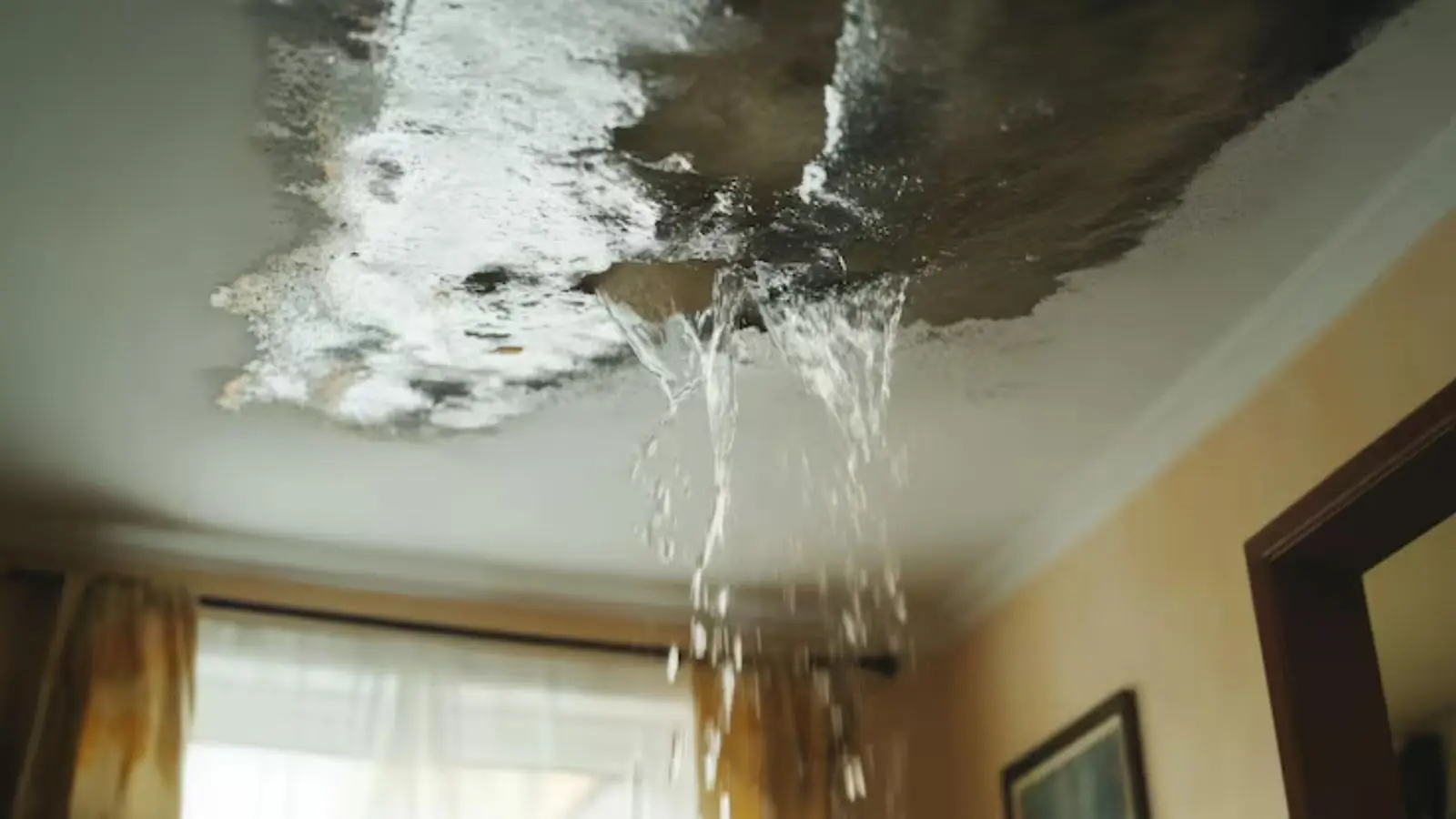
Call 911 first if water is near outlets, a light fixture, the electrical panel, or if you smell gas or see sewage. Otherwise, call whoever can stop the water, which is a plumber for a pipe, a roofer for rain, or your association for a shared building system. Then notify your insurer and call a drying crew, because the wet drywall and insulation keep damaging the house after the drip stops.
The order that protects your house and your claim
If water is coming through your ceiling right now
Work down this list from the top. The first cards are about safety and the last cards are about recovery. You may be able to do several of them at once if someone else is home to help.
Get safe, then stop the source
If water touches a fixture, outlet or panel, stay out of the room and call 911 or your electric utility. For a gas smell, leave and call SoCalGas. If it is a plumbing leak and the area is safe, close the fixture angle stop or the house shut-off valve.
Call the trade that owns the source
A supply line, drain or water heater leak goes to a licensed plumber. A leak that appears only during rain goes to a roofer. A leak that arrives from a neighbor's unit goes to your association first.
Protect what you can
Move furniture, electronics and rugs out of the drip zone. Set a bucket under the drip, and stand clear of any bulge in the drywall.
Photograph, then tell your insurer
Take photos and video of the ceiling, the room above, and damaged contents before cleanup. Ask your insurer how to open a claim and what they want documented.
Call a drying crew the same day
Wet insulation and framing above the ceiling keep soaking in long after the visible drip ends. Calling the 24/7 line at (949) 670-0939 gets a crew moving on drying while you handle the plumber.
Matching the call to the situation
| What is happening | Call first | Then call |
|---|---|---|
| Water at a light fixture or outlet, or a sparking sound | 911 or your electric utility | A licensed electrician after power is safe |
| Gas smell near the leak | SoCalGas, then leave the house | Plumber and restoration crew after clearance |
| Pipe or supply line leaking from a bathroom or kitchen above | Licensed plumber | Drying crew and your insurer |
| Only leaks during rain | Roofer | Insurer, then a drying crew |
| Dark water, odor or sewage backing up | Licensed plumber, and stay out of the room | Crew trained for contaminated water |
| Condo or townhome with a unit above | Your association and the neighbor's contact | Insurer and drying crew |
ANSI/IICRC S500 is the published industry standard that defines Category 1, 2 and 3 water. Ask any company whether its crews work to it.
Water already through the ceiling?
Our 24/7 line at (949) 670-0939 can start the drying conversation while you wait on the plumber. Same-day response when available.
Why the drying call should not wait for the repair
Homeowners often wait for the plumber to finish, then for the insurer to answer, before they think about drying. That order costs days. EPA guidance says to dry water-damaged areas within 24 to 48 hours to prevent mold growth, so the clock starts when the leak starts.
A crew can extract standing water and set air movers and dehumidifiers on your ceiling cavity while the plumber works on the pipe. Moisture meters and thermal imaging help locate wet insulation that you cannot see. The first hours are the focus of emergency water removal work, and the longer drying phase is covered under water mitigation.
It helps to know what each trade does not do. A plumber repairs the pipe but usually does not dry the framing or replace drywall. A roofer fixes the roof but leaves the wet ceiling below. A restoration crew dries and removes damaged materials but does not replace pipes. Each call covers one piece, and skipping one leaves a gap that shows up later as a stain or a smell.
What to tell each person who answers
- To 911 or the utility: the exact address, what the water is touching, and whether anyone is in the house.
- To the plumber or roofer: where the stain appeared, when it started, and whether it only shows up in rain or after a specific fixture runs.
- To your insurer: when you discovered the damage, what you did to stop it, and that you are keeping receipts and photos.
- To the drying crew: the size of the stained area, whether the ceiling is sagging, and whether the water looked clean or dirty.
Sudden and accidental water damage is often covered, while gradual leaks and neglect often are not. Flood is usually excluded from standard homeowners policies. Ask your insurer which category your leak falls into, and keep what they tell you in writing.
Utilities and responders to know in Laguna Niguel
Moulton Niguel Water District supplies water in Laguna Niguel and runs a 24/7 emergency line, which you can find on its website. Its guide says the house shut-off valve is typically at the front of the home just below the hose bib. If the meter keeps moving with that valve closed, call a licensed plumber or leak detection company, because the leak is outside the house plumbing.
Electric service is split by address: Southern California Edison serves the western part of the city and San Diego Gas and Electric serves the east. Check your bill before you call so you reach the right utility. SoCalGas provides natural gas. The Orange County Fire Authority and the Orange County Sheriff serve the city when 911 is needed.
Calling from nearby towns
The same call order applies if the ceiling is in Laguna Hills or Laguna Beach, where our dispatch also responds. Confirm your own water district and electric utility by address.
Ceiling leak call questions
Stop the water first, because insurers expect you to take reasonable steps to protect the property. Then call your insurer promptly. California regulations that insurers must follow set deadlines to acknowledge and decide a claim, so ask your insurer how they apply to you.
Yes when water touches electrical parts, the ceiling is sagging, or the source is still running. A stopped drip with a small dry stain can wait for business hours. If you are unsure, treat it as urgent, because water spreads in the cavity where you cannot see it.
You can remove a puddle and ventilate the room. Fans without moisture readings cannot tell you when the cavity above the ceiling is dry. Drying equipment on a wet ceiling should be set and monitored by trained crews.
That depends on your governing documents and the cause. Check your CC&Rs and ask your association. Document the damage and report it in writing.
Start by closing your house shut-off valve and watching the meter. If it still moves, ask Moulton Niguel Water District how to reach its emergency line and call a licensed plumber or leak detection company. The district's guide points customers to licensed plumbers for line problems.