
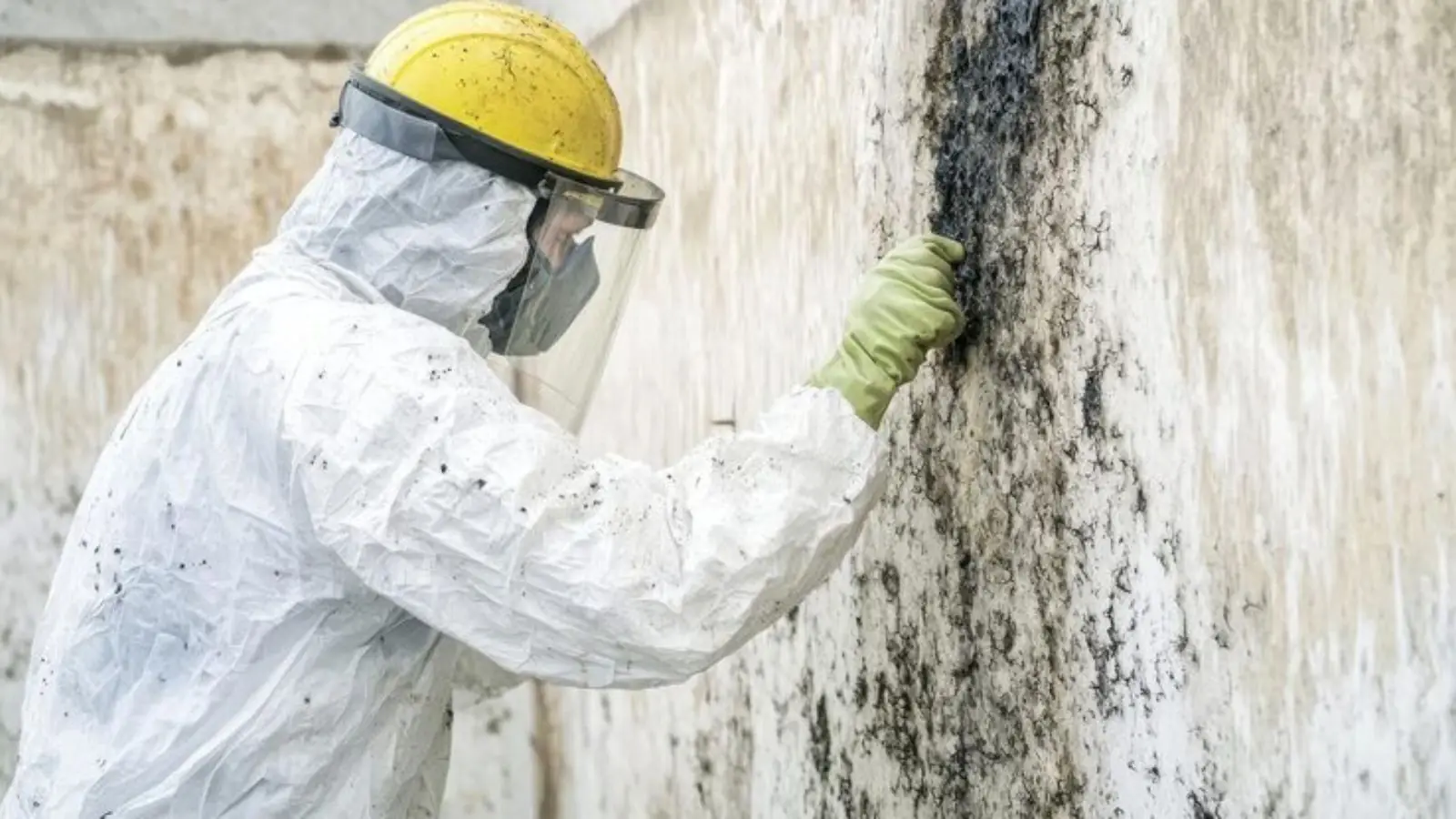
Removing dark mold is a three-part decision. How big is the area, what material is it growing on, and has the moisture been fixed? EPA says an area smaller than about 10 square feet, roughly a 3 ft by 3 ft patch, can usually be handled by the homeowner. Once mold covers more than that, or there has been a lot of water damage, EPA says to hire help.
The label black mold gets applied to any dark growth, and color cannot tell you the species. This page does not diagnose anything or speak to health, which belongs with a physician. It covers the practical question of who removes what.
What you can reasonably do yourself
DIY cleanup fits one situation: a small patch on a hard, non-porous surface after the leak has been repaired. Think of tile grout, a window frame or a painted wall with a short stain. The goal is physical removal plus drying, not a chemical fix.
Fix the water problem first
Repair the leak, clear the clogged line or improve the ventilation. Cleaning before the moisture is gone just resets the clock.
Protect yourself and the room
EPA suggests gloves, eye protection and a respirator. Close interior doors, and avoid dry brushing that sends material into the air.
Clean hard surfaces, discard soaked porous ones
Scrub non-porous surfaces with detergent and water and dry them completely. Ceiling tile, carpet and soaked drywall are porous and often cannot be cleaned, so they get bagged and removed.
Dry and watch
Run airflow until the area is dry to the touch and keep checking over the following weeks. New spots point to moisture you have not found yet.
Common DIY mistakes that make it worse
- Spraying cleaner on the patch and walking away without drying it
- Dry scrubbing or sanding, which spreads material through the room
- Mixing household cleaning products in a closed bathroom
- Tearing out wet drywall without knowing what is behind it, such as wires or pipes
- Skipping photos, which leaves nothing to show an insurer, lender or buyer
Most of these come from rushing. A dark patch feels urgent, but an hour spent finding the moisture source and taking photos saves more than a quick scrub. If you are unsure about any step, stop and ask for an assessment.
Where DIY stops
| Situation | DIY or hire | Reason |
|---|---|---|
| Under about 10 sq ft on grout, tile or a painted wall | DIY is usually reasonable per EPA | Small, hard surface, source fixed |
| Over 10 sq ft, or spread across several rooms | Hire | EPA points to professional help above that size |
| Growth on soaked drywall, insulation or carpet | Hire | Porous material has to be removed carefully and the cavity dried |
| Mold found after a flood or sewage backup | Hire | EPA says contaminated water needs an experienced professional |
| Cause unknown or the stain keeps returning | Find the source first | A moisture inspection comes before any cleanup |
| A buyer's lender wants documentation | Hire | Written scope and clearance testing are usually requested |
These lines come from EPA's published homeowner guidance. Individual homes can sit on either side of them.
What to do before help arrives: keep the area closed off, keep children and pets out, and do not disturb or scrub the growth. Disturbing mold can spread spores to other rooms.
Standing in front of a large dark patch?
Call (949) 670-0939 to describe it. The 24/7 line is open, and scope and price are explained before work starts.
Why painting or caulking over it fails
EPA says not to paint or caulk moldy surfaces. Paint seals the growth against the wall and the dampness that fed it stays put. The patch tends to return through the new coat.
Fresh paint also hides evidence. An inspector, insurer or buyer who later finds growth under a repaint will ask why it was covered. Photograph the damage first, then clean or remove.
What professional removal adds
Containment
Plastic barriers and sealed doorways keep disturbed material from drifting into the rest of the house.
Air filtration
HEPA air scrubbers and controlled airflow capture airborne particles during removal.
Controlled removal
Affected drywall, insulation or flooring is cut out, bagged and carried out without dragging it across clean rooms.
Cleaning and drying
Framing and remaining surfaces are cleaned and dried to readings, which is what mold remediation is built around.
Professional work follows ANSI/IICRC S520, the published standard for mold remediation, and you can ask any company whether its crews work to it. Ask too about independent clearance testing afterward. EPA notes that surface sampling may help show whether an area was cleaned adequately.
If wet drywall or flooring is part of the picture, water damage cleanup covers removing damaged materials and sanitizing the space before rebuilding.
Stop and call a professional if
The material is wet and sagging, the water involved sewage, or you are not sure where the moisture is coming from. Do not cut into walls near wires or pipes. If water touched an outlet or panel, stay out, cut power only if the panel is dry and safe to reach, and call 911 or your utility first.
Hiring and rebuild licensing in California
California's CSLB classification list has no dedicated mold removal or water damage license. Rebuild trades such as drywall, flooring, painting and plumbing are licensed, and CSLB requires a license for work of $1,000 or more in labor and materials combined. Check any contractor on CSLB's License Check tool, and ask whether your state licenses mold work.
Cost depends on the area, the materials involved, the drying needed and the rebuild scope. The real number comes from a scope after assessment. Ask your insurer whether the cause of your mold is covered, since sudden and accidental leaks are often covered and gradual ones often are not.
Older Homes in Laguna Niguel and Where Mold Hides
The city's Housing Element says most units were built before 1990, with about 6,000 built before 1980 and older neighborhoods dating to the late 1960s and early 1970s. Older roofs, supply lines and window seals have had more years to wear. When you find mold in an older home, plan to look at those spots first, along with the wall or ceiling below them.
Ask your contractor whether older building materials need to be checked before demolition. Nearby, homes in Dana Point and Laguna Beach get the same decision framework, with dispatch from our Laguna Niguel base.
Black mold removal questions
Not by color. Cleanup depends on size, material and moisture. Color cannot confirm species, so the same containment and removal decisions apply to any visible growth.
EPA generally does not recommend routine biocide use in homes. For small patches on hard surfaces, EPA describes detergent and water plus complete drying.
Porous materials with growth, such as soaked drywall, insulation, carpet and ceiling tile, often cannot be cleaned and are removed. Hard surfaces and framing are usually cleaned and dried instead.
Usually the rebuild is a separate scope covering drywall, texture and paint. Ask for it in writing so you know where removal ends and repair begins.
The method stays the same, but the places to inspect shift. The city's Housing Element shows about 6,000 units built before 1980, so older roofing, plumbing and window seals deserve a look. Ask your contractor whether older materials need checking before they are opened up.